Chasing Unicorns: Shrimp and Crab Flies for Elusive Flats Species
Published: 5th December 2025 | Author: Matt Harris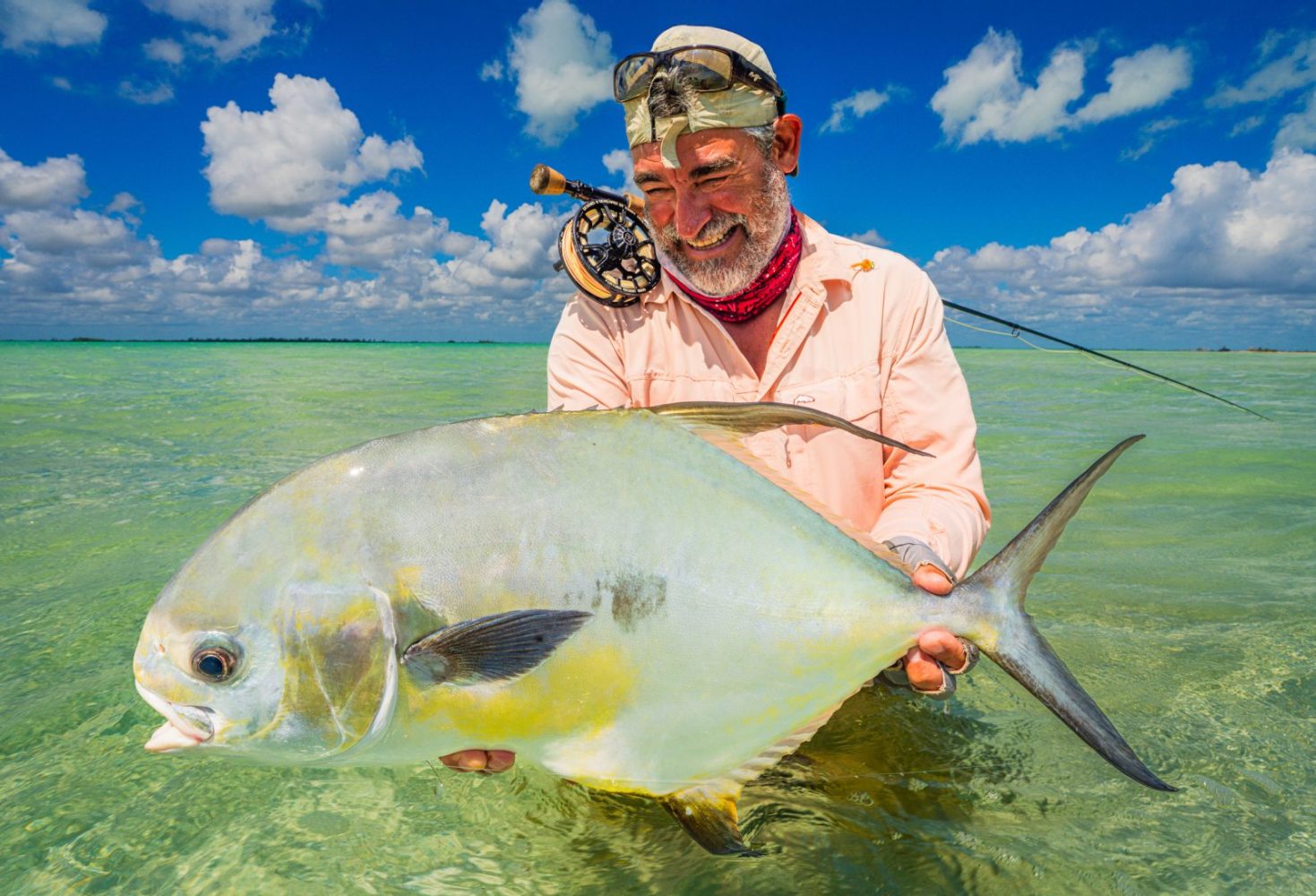
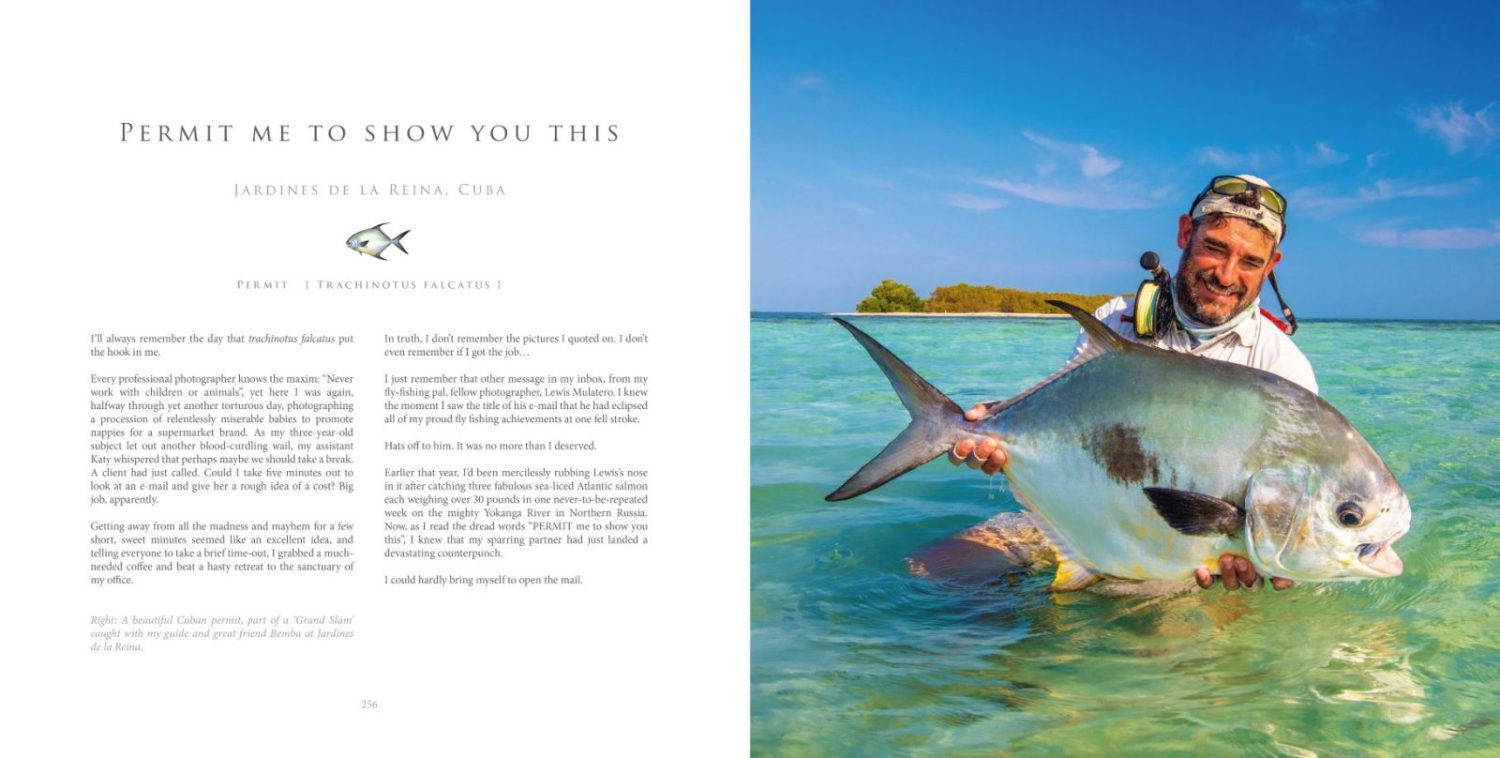
Fishing for permit is, for me at least, one of the most exciting forms of fly fishing on earth. No other form of fly fishing tests the angler’s ability to such an extent. Trachinotus Falcatus (permit) will break your heart a million times, but catching one beats just about any other thrill that fly fishing has to offer.
Sure, there are bigger, stronger fish out there. There are species that will undoubtedly give you a wilder ride like big berserking tarpon that catapult impossible distances into the wide blue Caribbean skies. Demented knuckle-busting Giant Trevally that will leave you battered and bruised after careering across the coral and demolishing all that precious kit. That said, no fish on the planet will make you hold your breath longer or make your heart beat faster than a permit. By understanding how to present shrimp and crab flies, you will set yourself up for success when the opportunity arises.
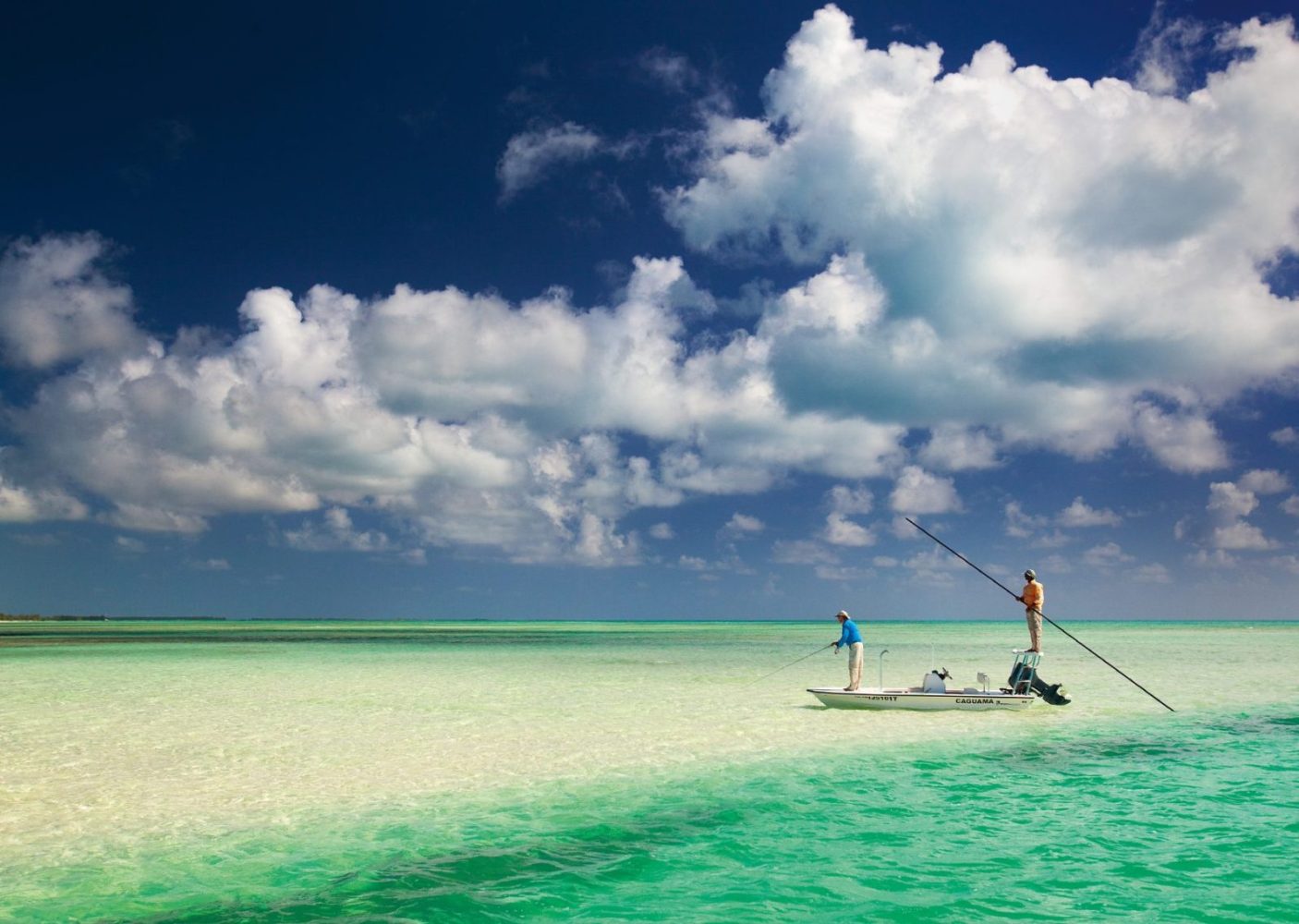
Permit exist throughout the Caribbean basin, and anglers can target them from Venezuela all the way to the Bahamas. Be warned, for permit are nobody’s fool. It took me a long time to catch my first permit. I could see them okay. Occasionally, I could even get my shrimp and crab flies in front of them. But could I get them to eat my fly? Not on your life.
Building Confidence
Confidence plays a huge part in fly fishing, and my central issue with permit-fishing was the fly. Everyone agreed that for permit, your fly needed to imitate a crab. Yet to my mind, doing so is fraught with problems. Firstly, every crab fly that I had ever seen back in those early days looked like a laughable, muppet-show caricature of the real thing. Having taken time to watch how a crab moves, I felt that there was no way you could imitate that sophisticated multi-lateral movement with bits of feather and fluff.
Secondly, I hated the traditional presentation of crab-flies. Anglers stripped them only until they caught the fish’s attention, then let the fly drop to the sea-bed to imitate a crab burrowing into the sand. This technique allowed the permit, equipped with its notorious cunning and its huge, saucer-sized eyes, all the time it liked to examine and most likely laugh at your daft concoction of carpet yarn, rubber legs and tempered steel, before leaving, unimpressed, for pastures new.
Thirdly, a free-falling fly presented at range from a drifting boat in often choppy water means that the angler has a great deal of trouble in keeping tight to the fly without moving it. More than once, I felt half-convinced that a permit had eaten my fly, but the line never tightened and my guide never called the strike. In a flash, the moment disappeared and the enigmatic permit cruised away while I wondered what might have been.
Shrimp Flies
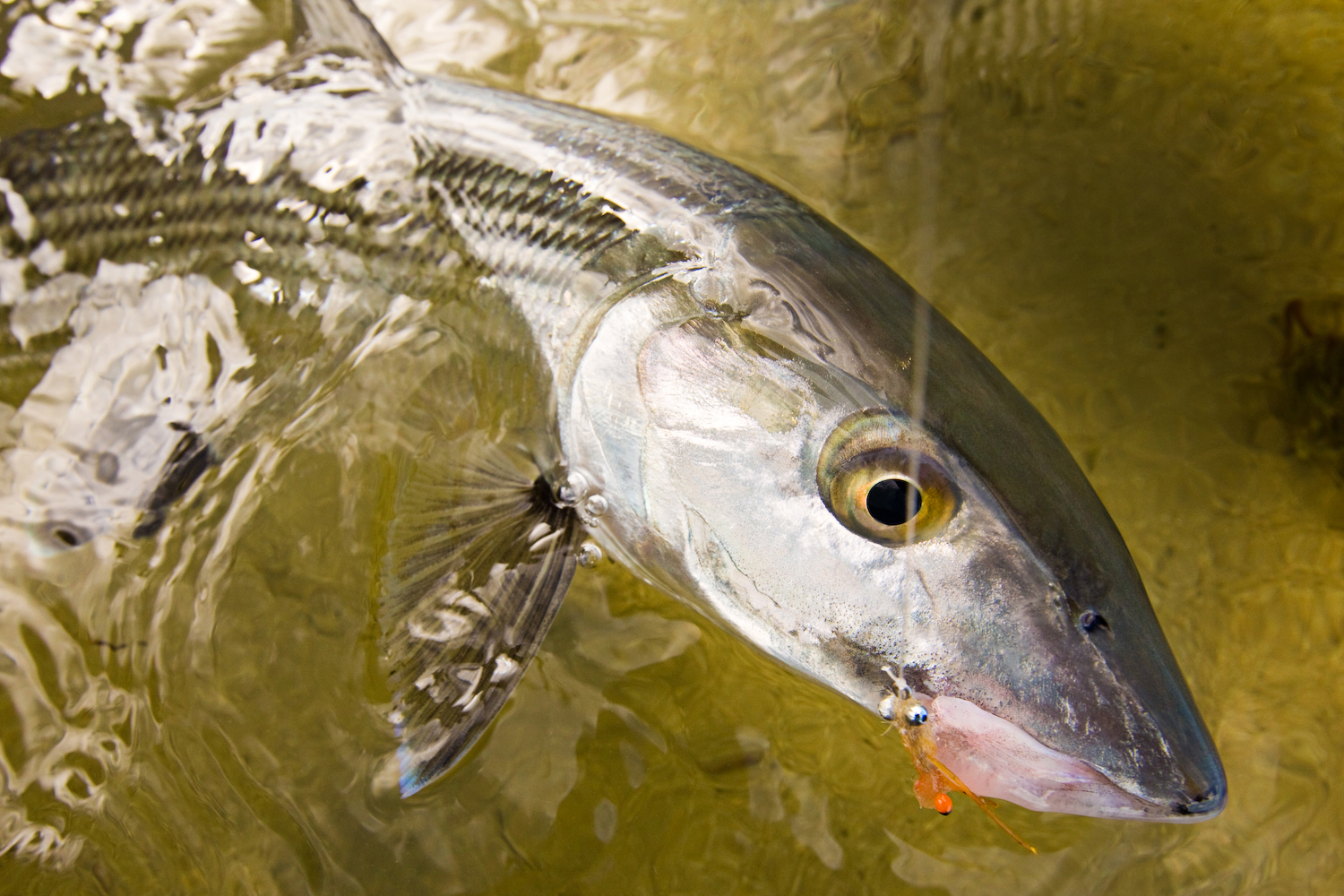
I started to wonder if I should break from the herd… After all, permit are not exclusively addicted to crabs. One of their other staples is the mantis shrimp, a big, chunky mouthful that zip around the tropical shallows. As they move around, they are sending out a big, loud “eat me” message to just about every fish in the sea. Shrimp flies have accounted for some extremely cunning bonefish, so why wouldn’t their bigger cousins the permit come and have a go?
What really appealed to me is that shrimps move so quickly. An imitation could be fished at speed, blurring the rough edges and the big steel hook, and provoking the fish to make a decision before a rather juicy snack had disappeared into the next postal code. There are none of the static-crab guessing games: when you can’t strip your shrimp fly back anymore, you’re left in no doubt…you’re attached to a permit. I’d fished with some brilliant Australian guides who swore by shrimp flies for Trachinotus Blochii, their own Indo-Pacific Permit, and I started to toy with the idea of using something similar.
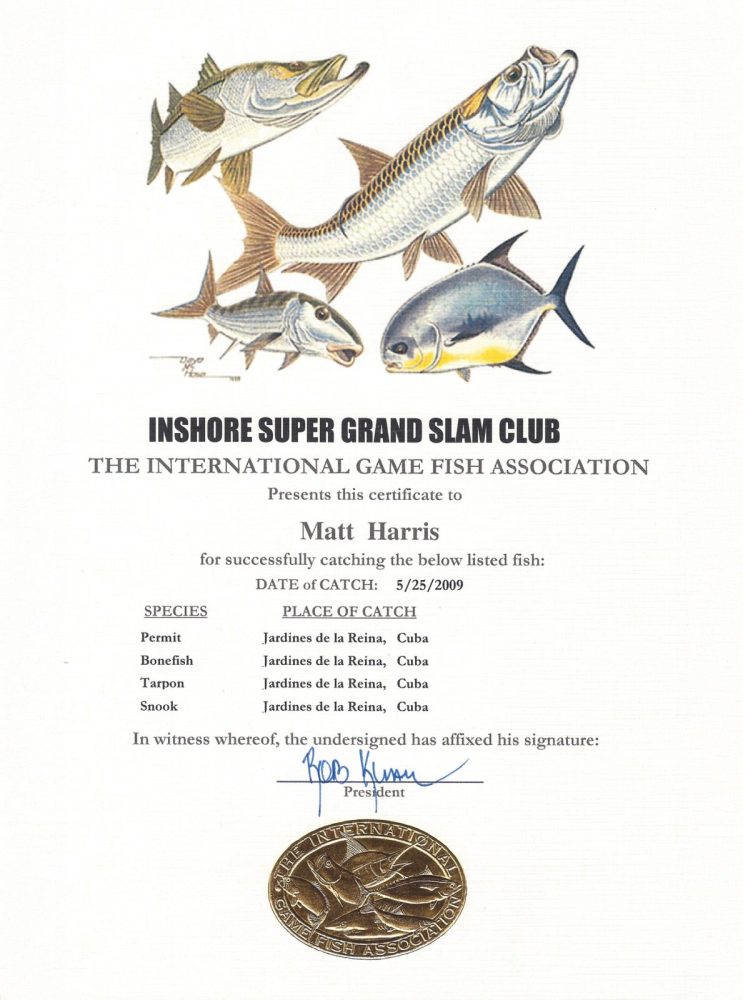
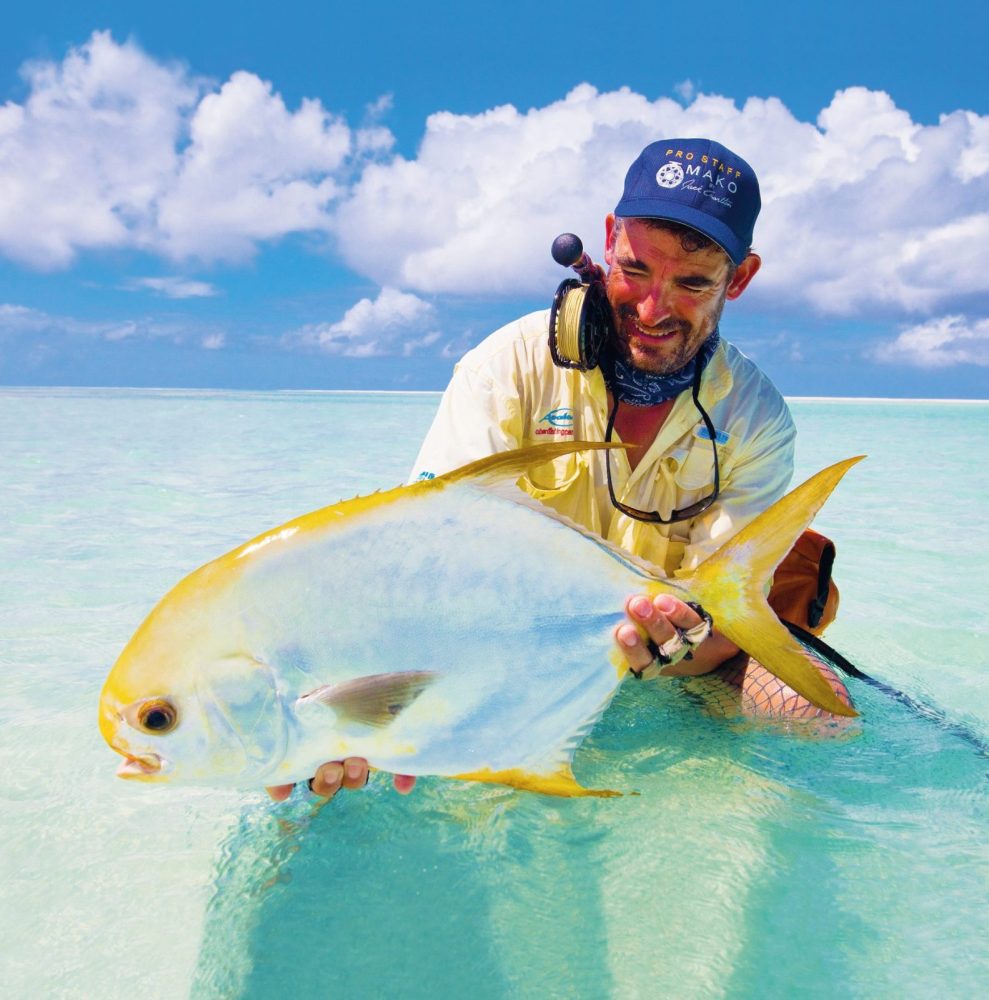
I caught my first permit at Jardines de la Reina in Cuba in 2009, on a home-tied shrimp fly. It was a special day. I subsequently managed to catch a bonefish, a tarpon and, finally, at around 3 pm in the afternoon, a fish that is almost impossibly rare at JDR – a snook – thus making us the very first to manage the coveted “Super Grand Slam” in the fifteen long years that sport-fishing has been taking place at Jardines.
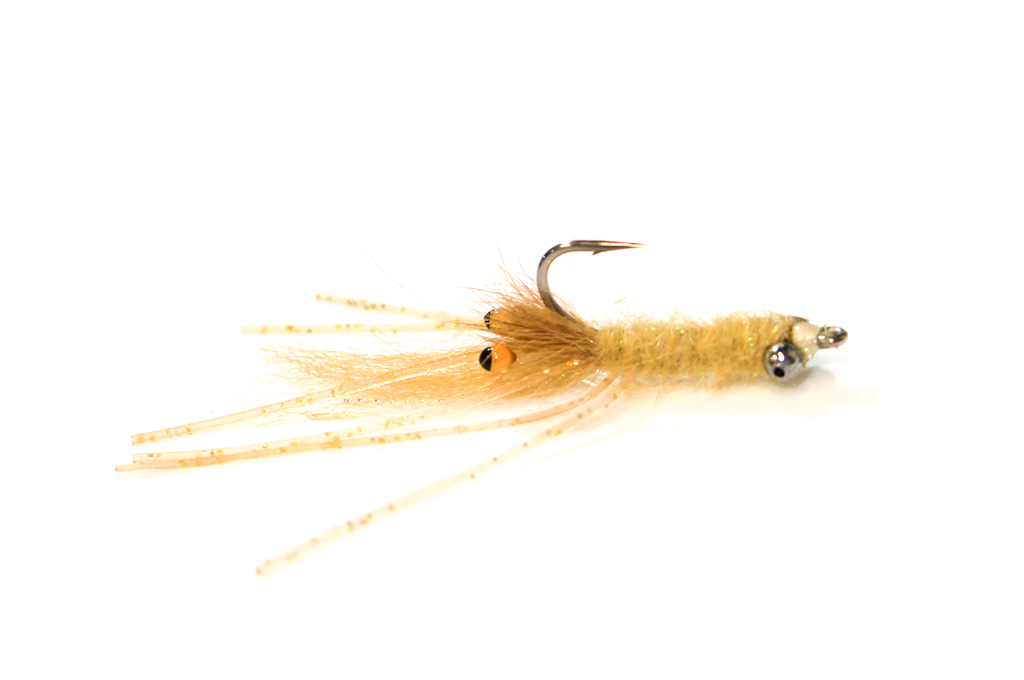
Avalon Shrimp
Soon after, Mauro Ginevri, the lodge manager at Cayo Largo, also in Cuba, invented the Avalon Shrimp. This fly became my “go-to” for permit fishing.


Squimp Fly
Another productive pattern for me is the Squimp fly. This fly became indispensable when calm, windless conditions and skinny water meant that the larger, heavier Avalon was too splashy.


Cuban Shrimp
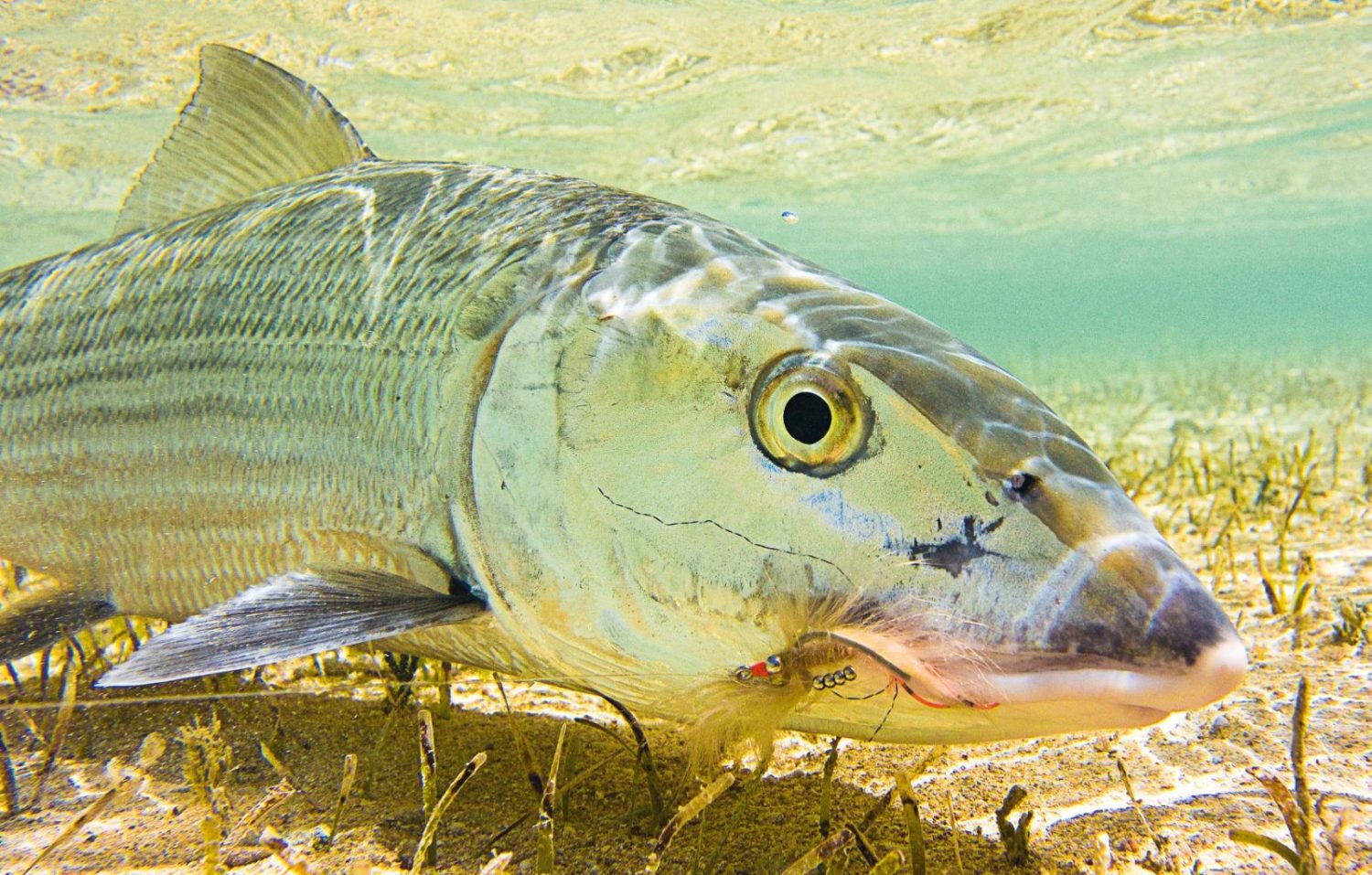
The Cuban Shrimp is also a great change pattern in windless conditions. This is one of the very best big bonefish flies I have ever used.

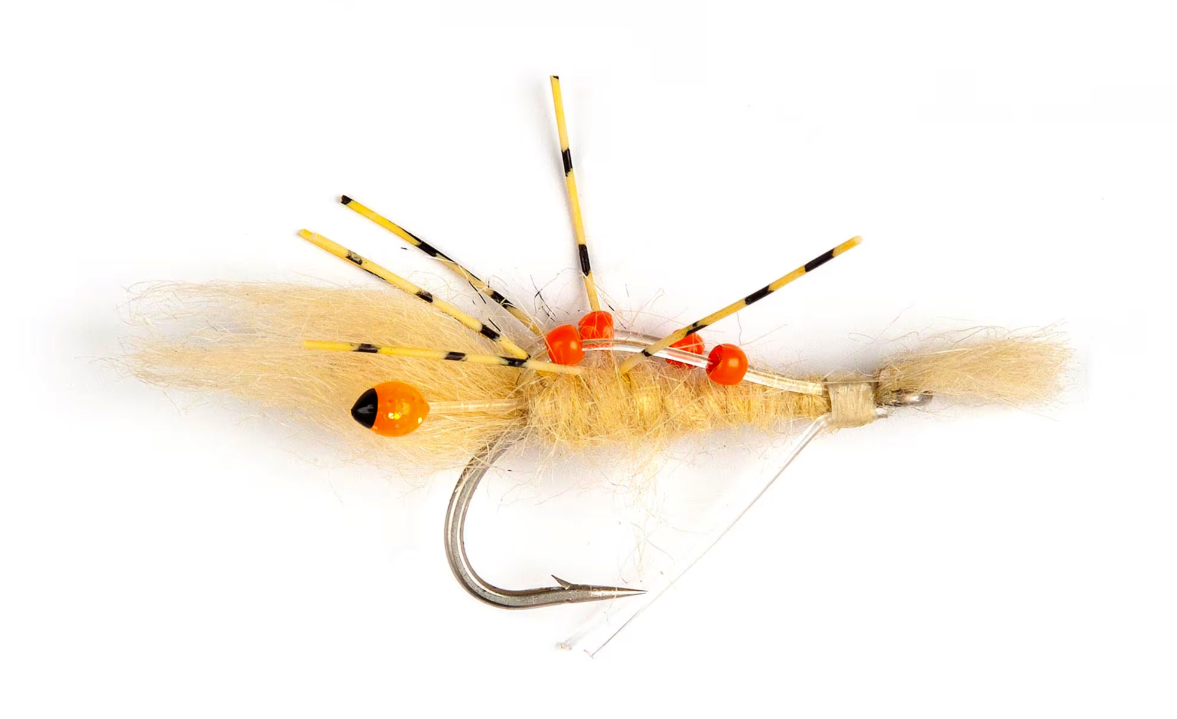
Sand Prawn
My great friend James Christmas created the Sand Prawn. We used it to catch my first Indo-Pacific Permit at Alphonse in the Seychelles in 2011.
Crab Flies
As I started to extend my search for permit and other saltwater species, I found new locations where crabs were the predominant food source. Crab fly designs were changing, and if I wanted to catch permit anywhere I went, I knew that I was going to have to make them work for me.
Huge concentrations of small, mottled olive and white crabs populate the vast rocky lagoons at the west end of Cayo Cruz in Cuba. Here, there are very few shrimps present. The fish are some of the very biggest that I have seen anywhere.
Flexo Crabs

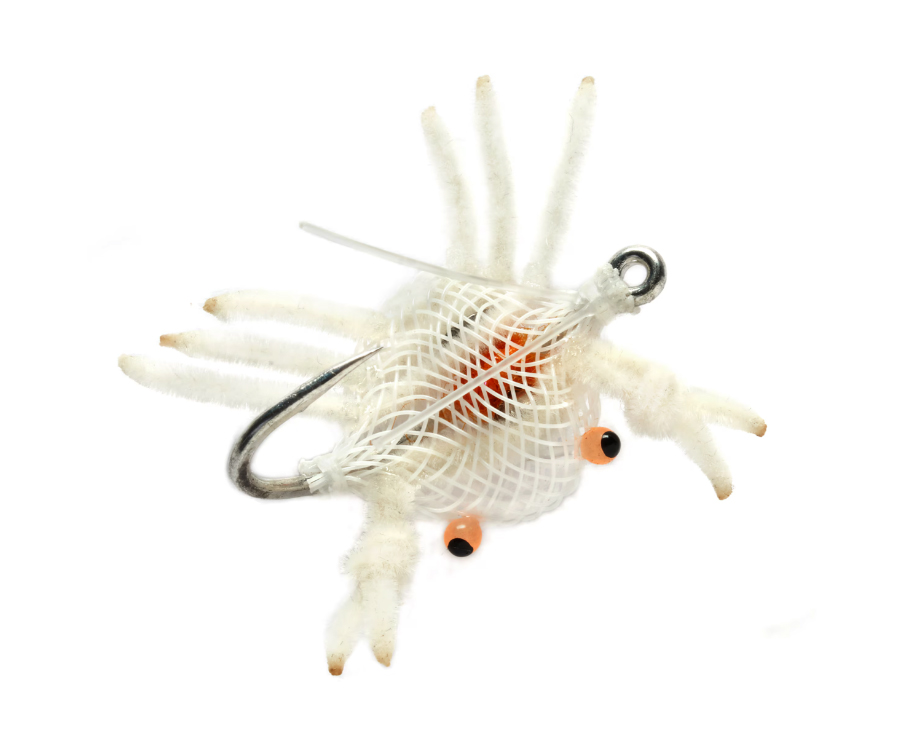
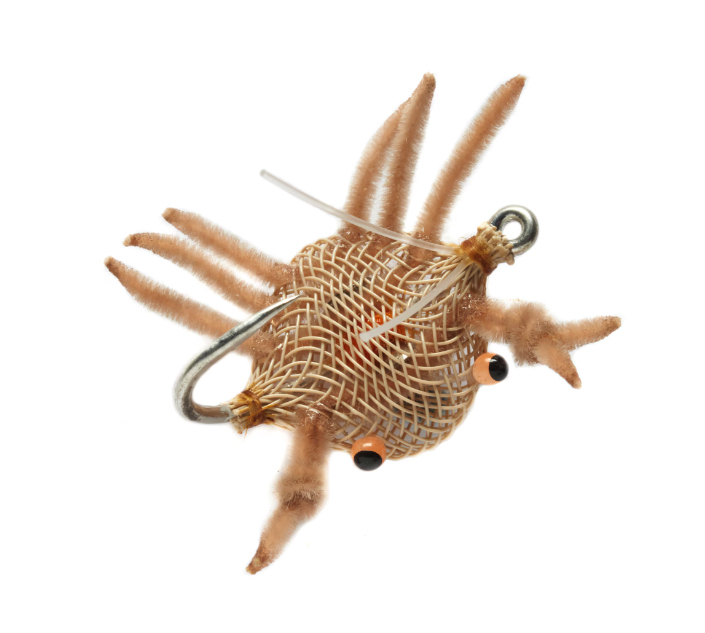
One fly in particular caught my eye. The Flexo Crab was a unique pattern and its design is ingenious. Made of a translucent mesh, the fly pushes water but virtually disappears when thrown into the water. As the sea-bottom shows through, the fly merges into whatever background it is placed upon. Much like the natural, this is the beauty of the fly’s design. If you can get the permit to see the fly as it falls through the water column, then that same fish may well find the fly harder to spot the fly as it tumbles to the sea-floor.
As a result, the fish often seem to panic thinking that its supper is in the process of disappearing into the sand. Give the fly a second short strip to get its attention again, and your quarry will often swoop on the fly, relieved to have rediscovered the meal that it had momentarily written off as lost. If the fish tips up, be positive: draw the line tight and set the hook hard the moment you feel resistance.
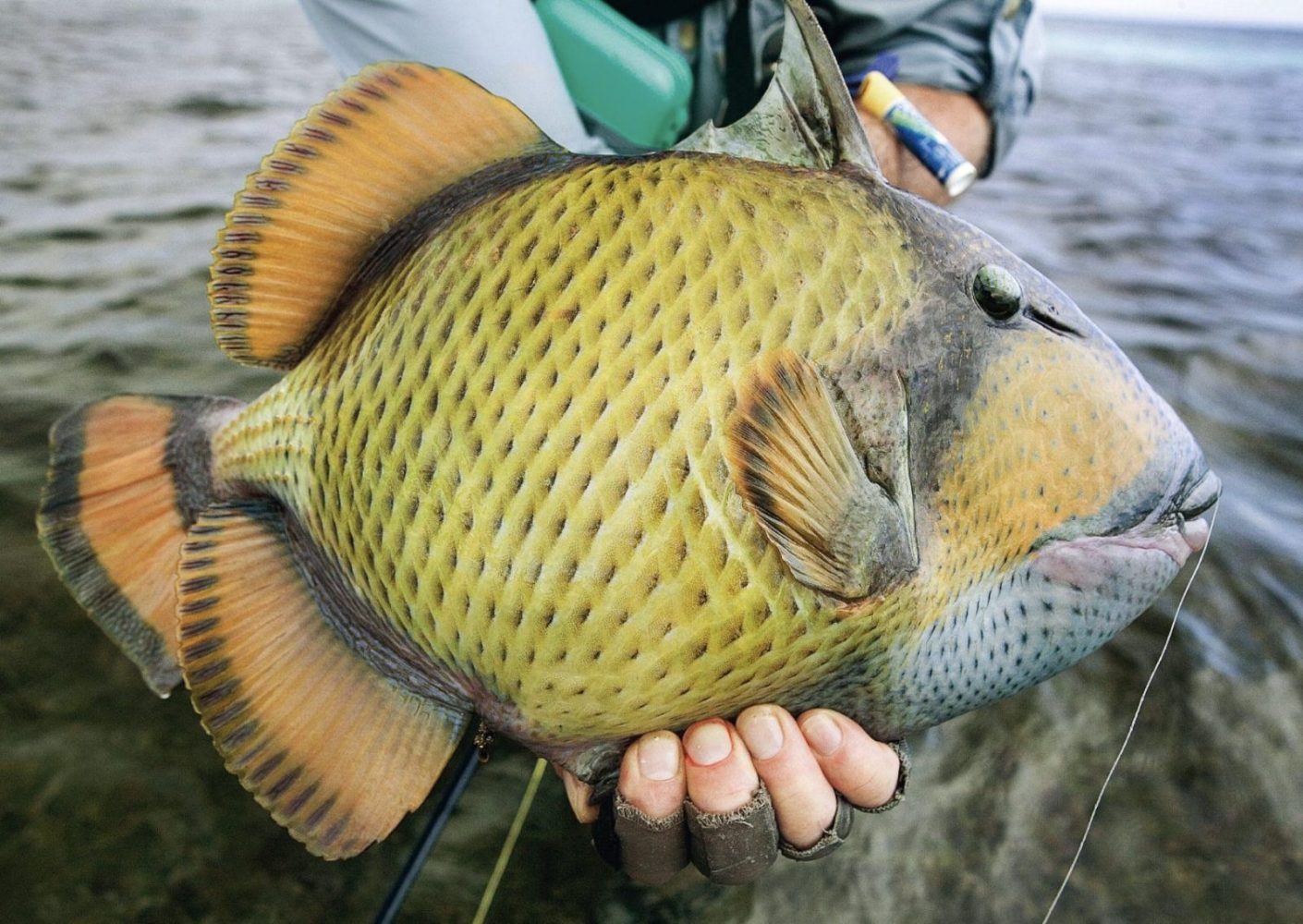
The Olive Flexo caught me and my friends some great fish. Others started to recognise its value and started to refine its design. Smaller versions started to prove themselves in the Seychelles for Indo-Pacific Permit, and also triggerfish. By using a sharpie to color the white flexo, I could accurately imitate the local forage. I found that a bright orange version, nicknamed the “Tandoori Crab”, was an absolute killer for Triggerfish. Overall, the white and tan versions are first choice for Trachinottus Blocchi.
Flats Are Full of Surprises
Bumphead parrotfish (Bumpies) are intriguing creatures that almost defy description: a hulking frame, wrapped in dinner-plate scales painted in a patina of rich emerald and turquoise hues, propelled by a vast, purple shovel of a tail. Until 2007, they were believed to feed only on coral – or more accurately the algae attached to it – and as such were considered utterly impossible to catch. Then, pioneering anglers in the Seychelles managed to work out a way to catch these bizarre-lookingcreatures on fly.

At the business end of the “bumpie”, a beady little eye and a preposterous, coral-crunching beak are kept company by a huge eponymous “bump”. This bizarre appendage is apparently used to smash up and crush coral but there was a suspicion that “Bolbometopon Muricatum” also use their bump to pin and crush small crabs before eating them, and his tactics are based on this theory.
Some anglers are skeptical about bumpies eating crabs, and believe that the fly is taken as a piece of coral tumbling through the water column, but having watched specimens barge their fellow shoal-mates out of the way to follow and aggressively eat a stripped fly pattern, I can tell you that I am absolutely convinced that they take the fly for a crab. If you can manage to dupe one of these colossal fish, believe me…you will not forget it.
The Strong Arm Merkin
Crab fly design continues to move forward… The Strong Arm Merkin crab has been a game-changer, allowing the fly to be stripped like a fleeing crab, thus allowing the angler to ‘blur’ the pattern much like a shrimp presentation.
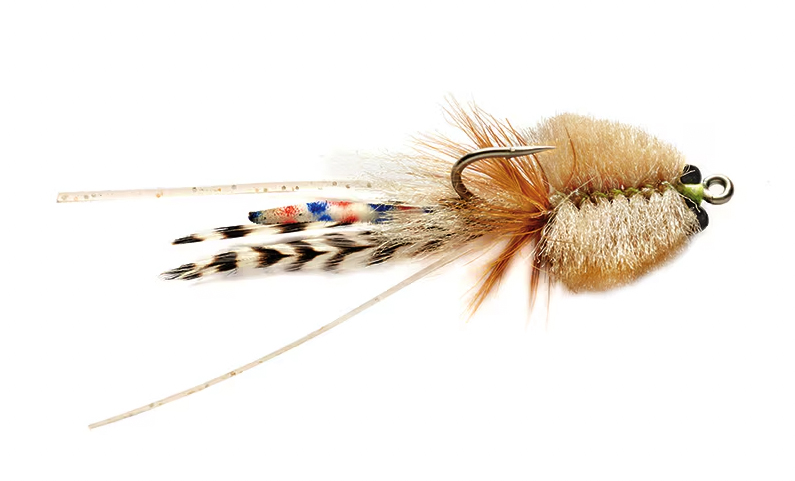
My own variation on this pattern – nicknamed the “Strong Arm of the Claw” uses Fulling Mill clear barred legs for the claw, rather than a chenille one. It was a huge success at Maya Azul Lodge in Mexico recently!
Tying Shrimp and Crab Flies
Fulling Mill offers a range of fly tying materials well suited for tying shrimp and crab patterns. If you like tying saltwater flies, check out their range!


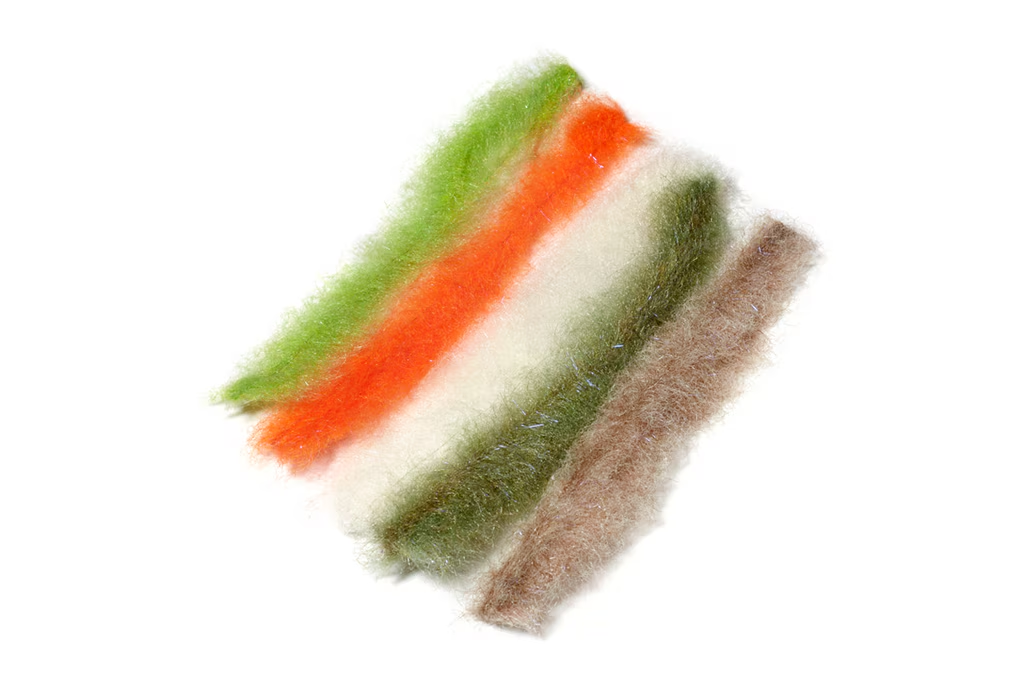
Don’t Go Flats Fishing Without Shrimp & Crab Flies
No matter where you’re saltwater fly fishing, there are almost always shrimp and crabs present. Both forages are staples for many of the species you will be targetting, so don’t leave home without a comprehensive selection of both.
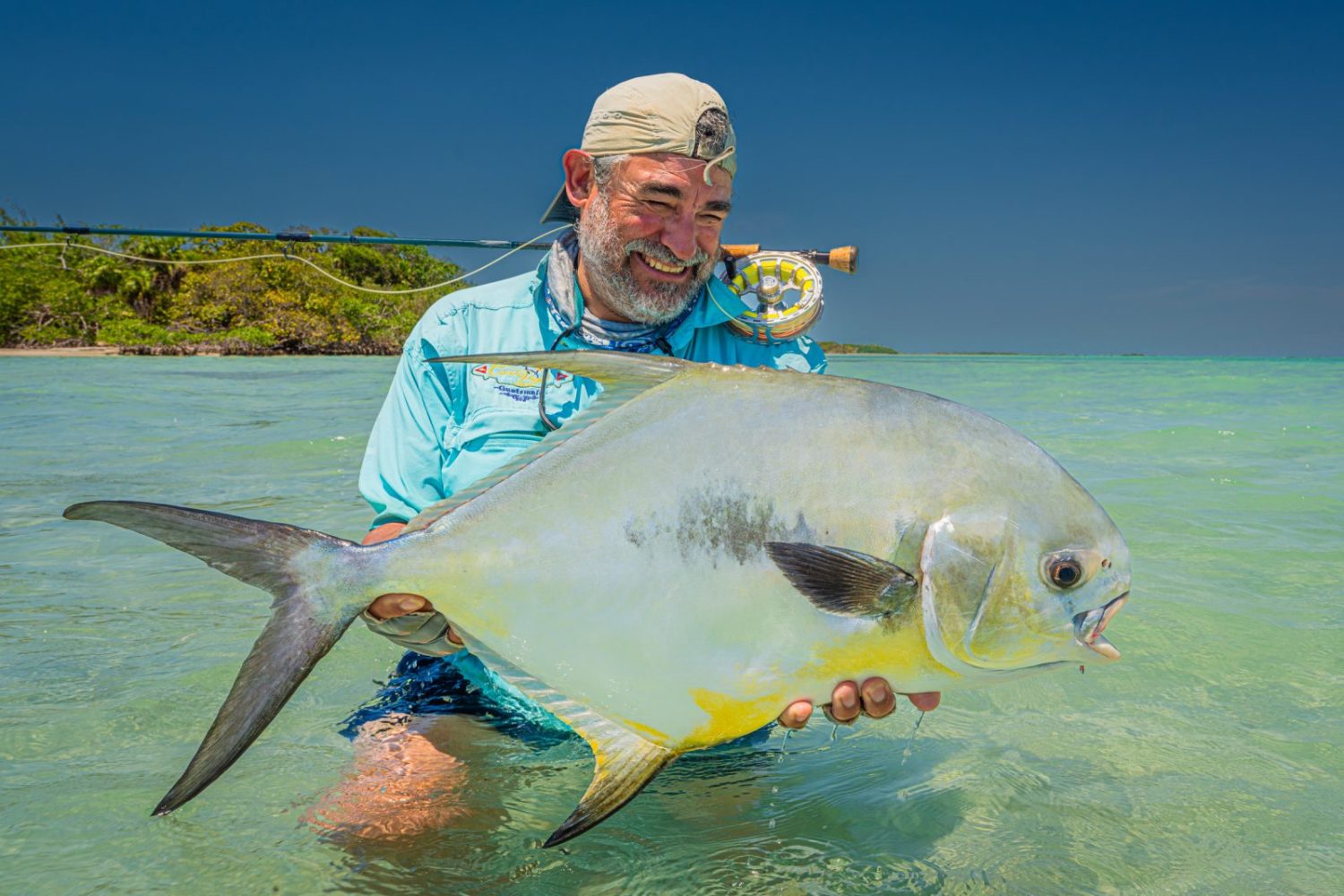
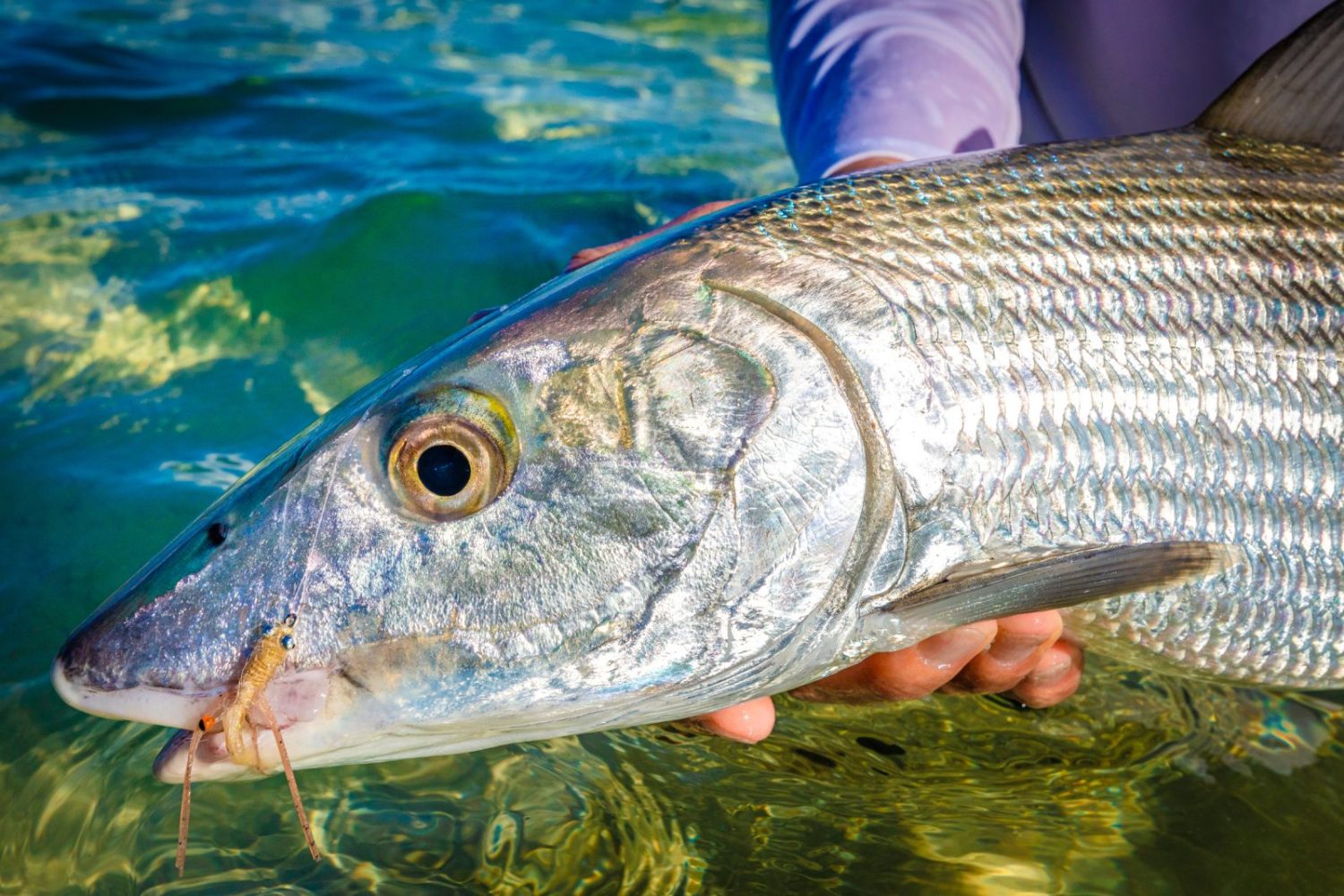
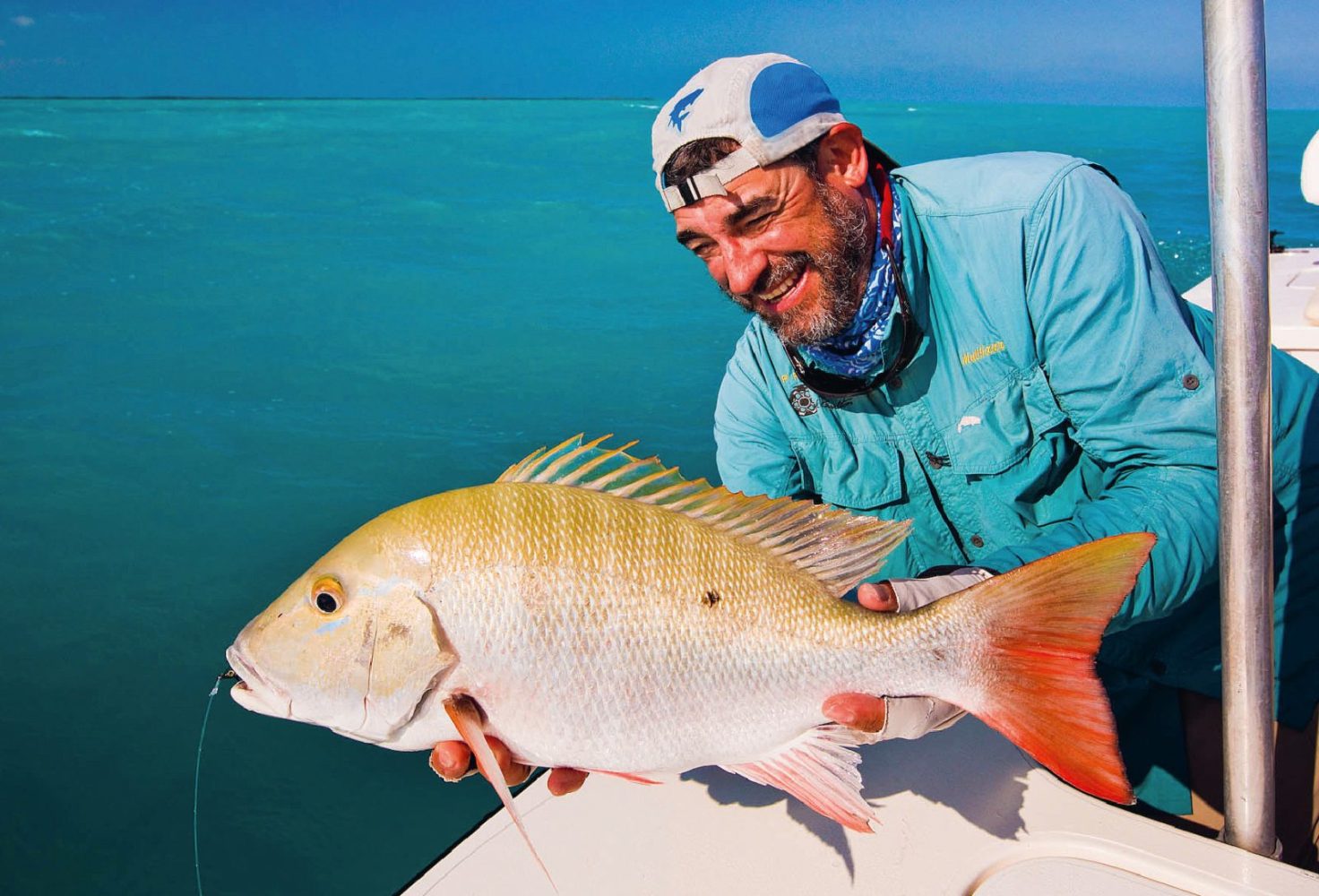
You can read more about fly fishing for permit in Matt’s book The Fish of a Lifetime, available here.
Words & Images copyright Matt Harris https://www.mattharrisflyfishing.com/




)