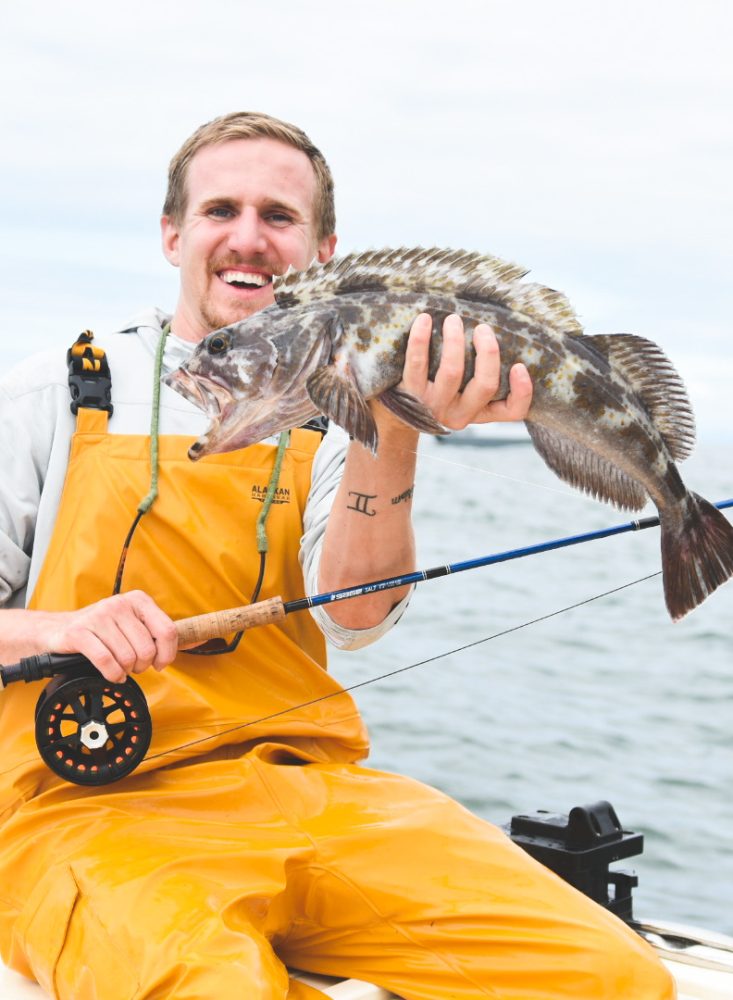
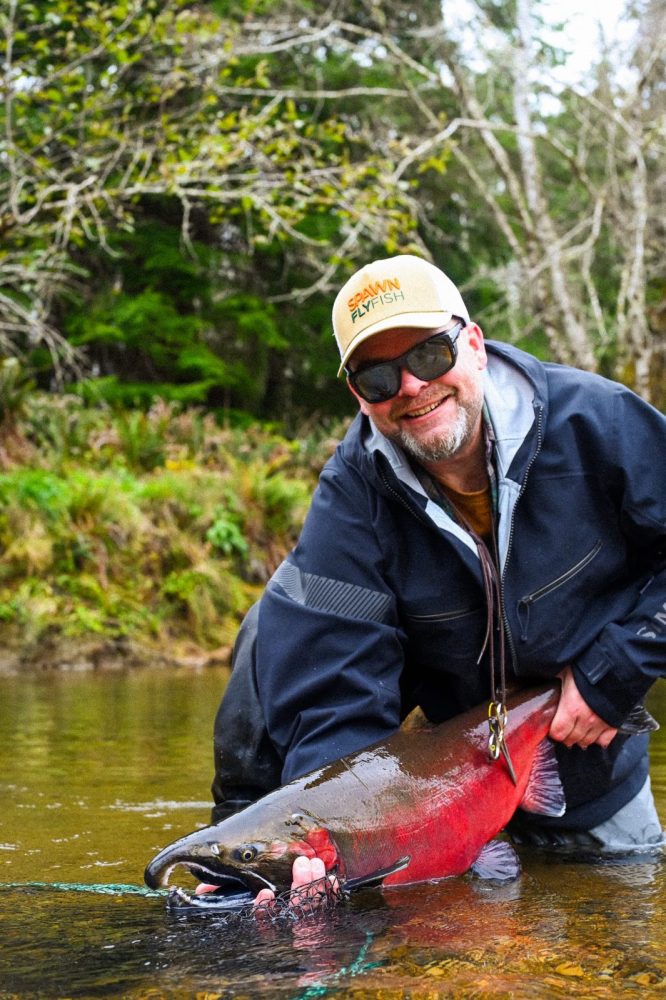
We are thrilled to have signature flies from the Spawn Fly Fish crew. The flies from Pete Rosenau and Josh Phillips are proven producers for a range of species, including sea-run cutthroat trout, salmon, and steelhead. Read on to learn more about Spawn Fly Fish and what Signature Tyers Pete and Phillips bring to our collection!
What’s the story of Spawn Fly Fish? When did you start? Where? Why?
Spawn Fly Fish was founded in 2017, sparked by a deceptively simple idea: create cutting-edge materials that add innovation to the art of fly-tying. At the time, Josh Phillips was juggling a professional soccer career in Colorado with every spare minute spent on the water, while Pete Rosenau was handcrafting world-class flies and materials from his home base in Arizona. A chance Instagram connection turned into countless late-night brainstorms and before long, the duo had pooled their savings and committed to building something new.
The early days were scrappy. They reinvested every penny back into the business, picked up side gigs to keep it going, and grew from Josh’s bedroom to his parents’ garage, constantly fine-tuning products and pushing boundaries.
In 2020, Luke Whiteman joined the team, bringing fresh energy and perspective. Alongside a close-knit crew of passionate anglers, fly tiers, and business minds, the vision kept growing.
Fast-forward to 2025, and Spawn Fly Fish now calls Ilwaco, Washington home. The flagship storefront—bright, coastal, and packed wall-to-wall with dream-worthy materials—sits next to a fully stocked warehouse that fuels their growing reach.
More than a business, Spawn Fly Fish is a story of grit, creativity, and community. It’s proof that with the right mix of big ideas, hard work, and relentless passion, something truly lasting can take shape.
Who is Signature Tyer Josh Phillips?
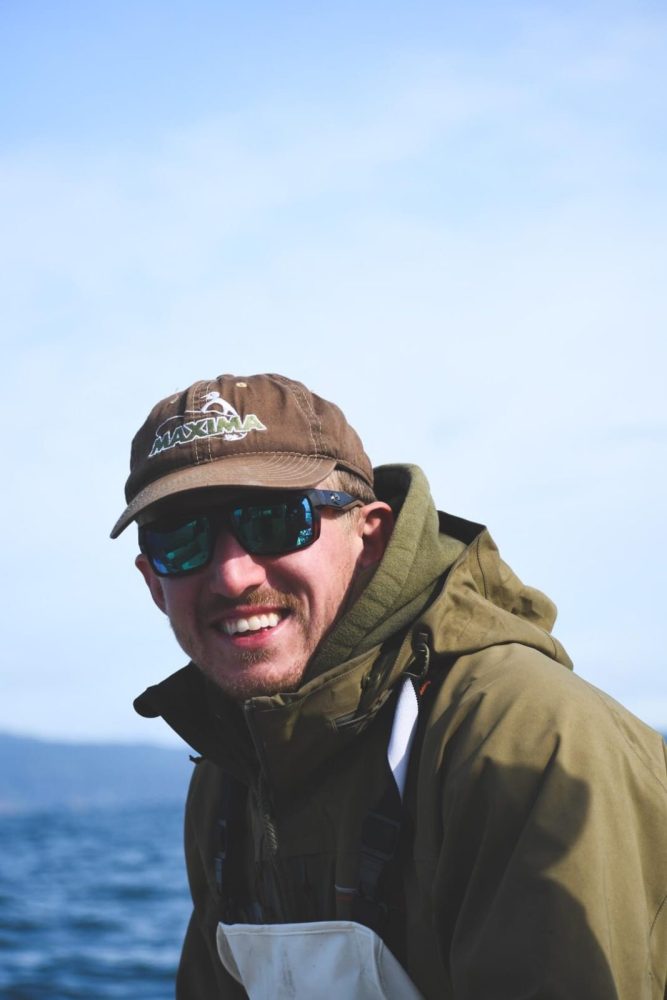
I am a 33-year-old graduate of Gonzaga University and former professional soccer player. As a kid, my weekends were defined by fishing trips with my father—a Washington State fisheries biologist at the time. After a brief hiatus from angling during my college years, I jumped back into fishing in Colorado where I played for the Switchbacks. I was fly fishing all day and mastering fly-tying by night, usually packing my vise onto the plane when travelling for games across the country. Today, I live in Ilwaco and last year my wife and I welcomed our first child into the family! I bring the same focus and drive to each day that once fueled my athletic career. Whether I’m speaking at community events or helping fellow anglers on the water, it’s my passion for the sport that keeps me inspired and moving forward.
Who is Signature Tyer Pete Rosenau?
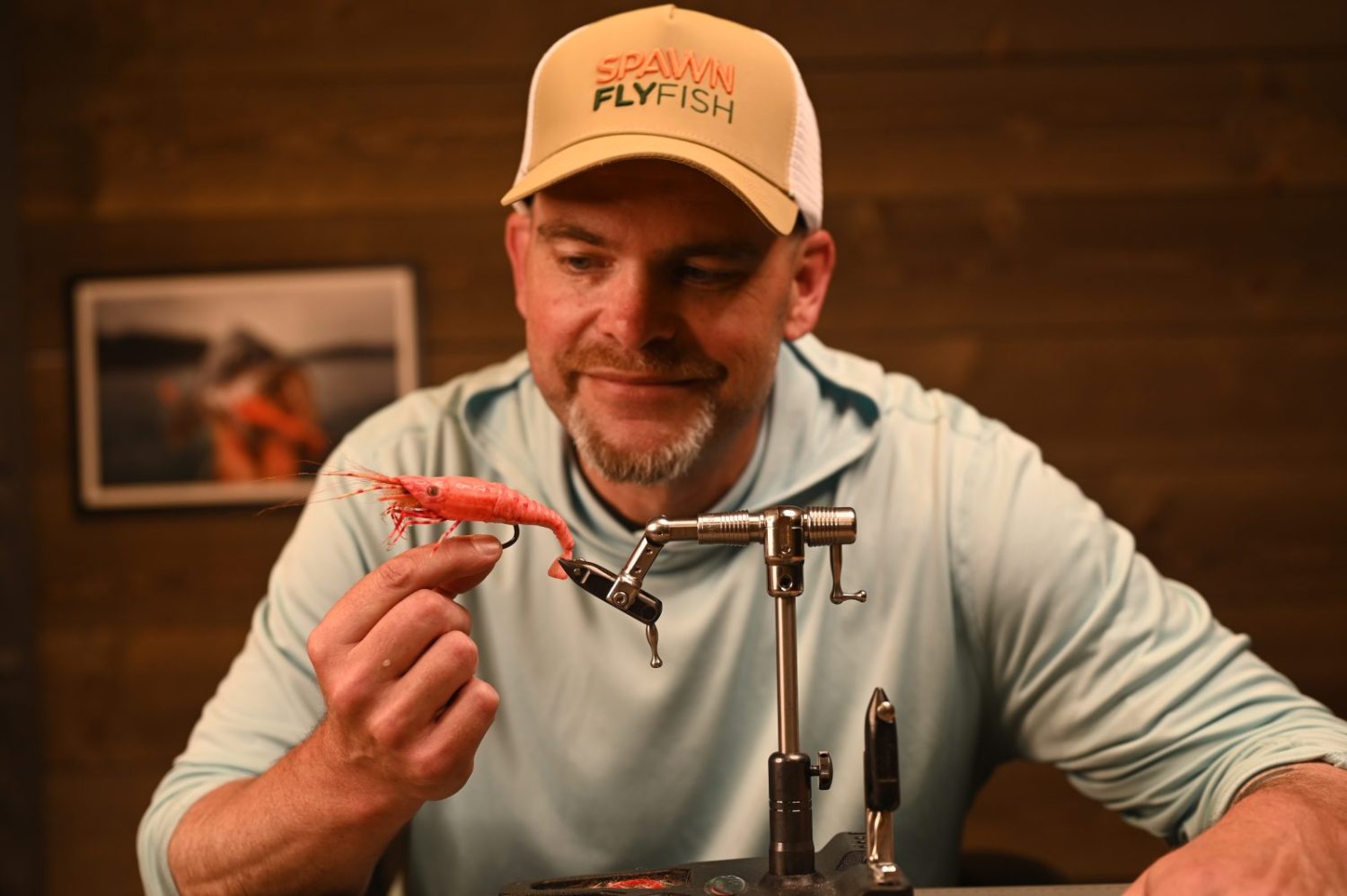
I was born in Minnesota and grew up in the Midwest. We spent more than our fair share of time on the water. We weren’t a fly fishing family, but fishing was definitely our primary source of entertainment. I was fortunate to fish most of the Great Lakes and their tributaries for many different species. The most exciting to catch were always the Northern pike, but the most exciting to eat award would have to go the Lake Erie walleye.
That would all become fond fishing memory as life changed courses and I found myself moving west to Arizona. There, I learned how to cast a fly rod and became obsessed with tying flies. Embracing the idea that I could design flies that worked no matter who was using them ultimately led to meeting Josh Phillips and starting Spawn Fly Fish. I am rare and blessed to truly be doing what makes me happy for a living. Fishing in the PNW doesn’t hurt!
The entire embodiment of fly fishing would be enough to hold anyone’s interest, but there is truly something special about tying flies. For me there is no greater puzzle than finding that final tweak to a pattern that makes it hypnotic to the fish. The only thing better is the opportunity to share some of those patterns through Fulling Mill.
Your flies are well-known for targeting sea-run cutthroat. What other applications are they good for?
Josh: The fish we target with our flies are truly an exceptional testament to their crossover performance. We are targeting species that thrive in both fresh and saltwater, so they demand flies that excel everywhere. Whether you’re working a river run or stripping along the flats, these patterns are engineered to catch fish in any environment. We’ve balanced lifelike imitation with irresistible movement so that, no matter where you cast, they’ll trigger strikes.
Pete: In my experience the sea-run cutthroat are one of the more difficult trout species to catch on a consistent basis. If we’re chasing these fish on a coastal river we will likely encounter water conditions ranging from fresh to brackish to high salinity. What that means for my fly box is an assortment of treats that offer as many response triggers as possible. Sometimes that means exaggerated movement and sometimes it may be an extremely bright bead. These sea-run cutthroats seem to greatly prefer a fly that wants to interact with its surroundings versus a dead drift presentation.
For other species in the fresh water these flies offer prey recognition much like other patterns, but they are designed for the most aggressive takes and predatory reactions. Tight casting conditions in our local rivers demand a fly that drops quickly and instantly moves. These flies will get you in the zone whether you’re tossing at browns on the bank during a float trip or throwing darts at bass between the lily pads.
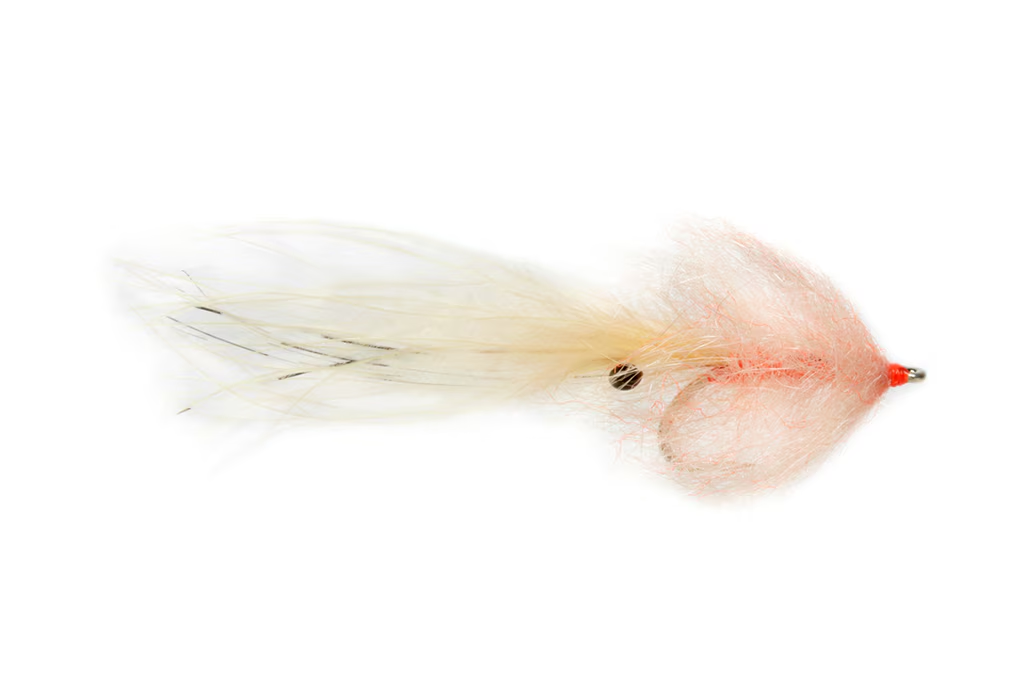
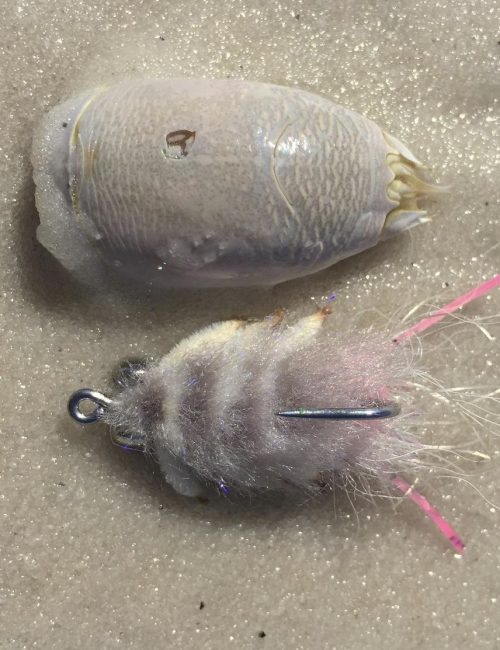
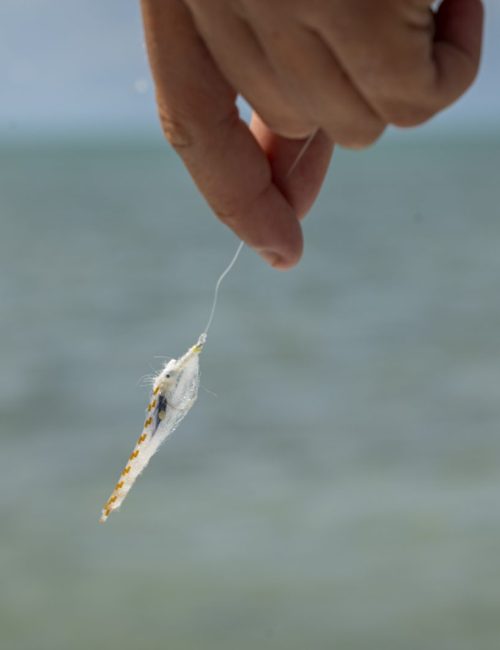
The same mentality carries over to the salt. There is a lot of shrimp influence in my patterns for a reason. Any fish that has even sniffed salt water knows shrimp and eats them. These flies are all designed to cause minimal surface disturbance when tossed and are jig style to avoid snagging in oyster beds. Take these flies to the flats and you are instantly ready to tackle any DIY bonefish trip. The Peach Bum has saved the day on picky A-run coho and even steelhead in the rivers.
Josh: Your Rainbow Yummy is a super popular pattern. Tell us about the story behind it, and why you designed it?
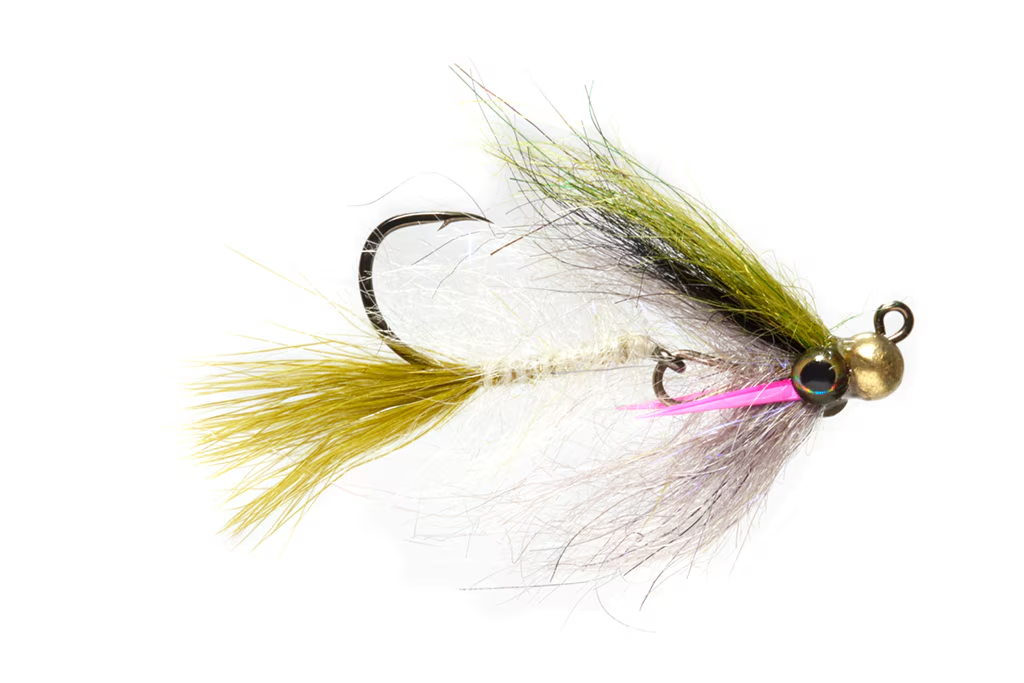
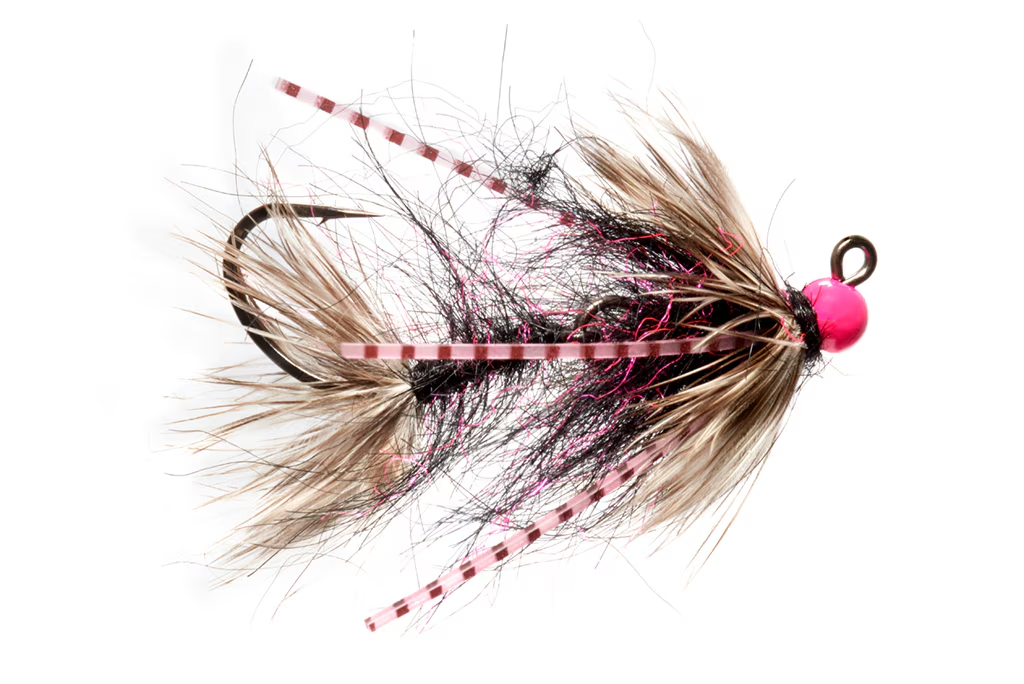
I designed this pattern to mimic a rainbow smolt and to specifically target trophy‐sized rainbows and bass. It delivers every time. The real test for me has always been introducing fresh patterns into waters long dominated by the same old flies. By combining our Spawn Jig Shank platform, custom Spawn dubbing, and an innovative use of goose biot, I created a fly that performs anywhere. It quietly earned “sleeper” status in Puget Sound then quickly became a go-to. Tied in an endless range of sizes and colors, it truly adapts to any fishery’s needs.
Pete: Your Peach Bum is a super popular pattern. Tell us about the story behind it, and why you designed it?
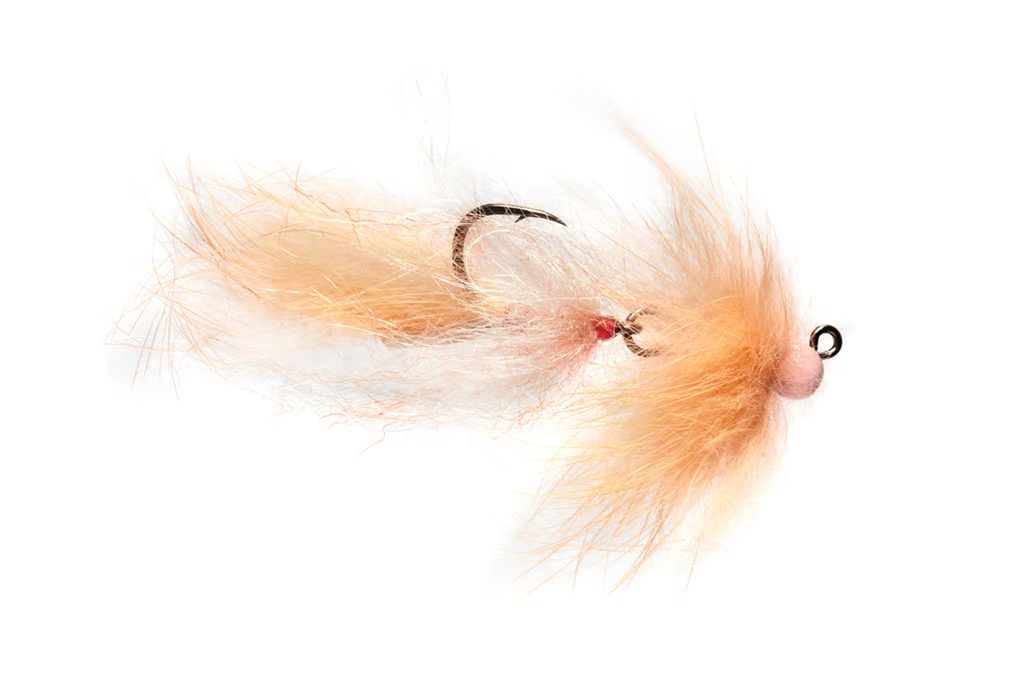
The Peach Bum came from the need for a shrimp fly that was durable, would get eaten by anything that swims and was easy to cast. My goal was to tie a fly that made it as simple as possible to catch sea-run cutthroat in both salt and freshwater scenarios.
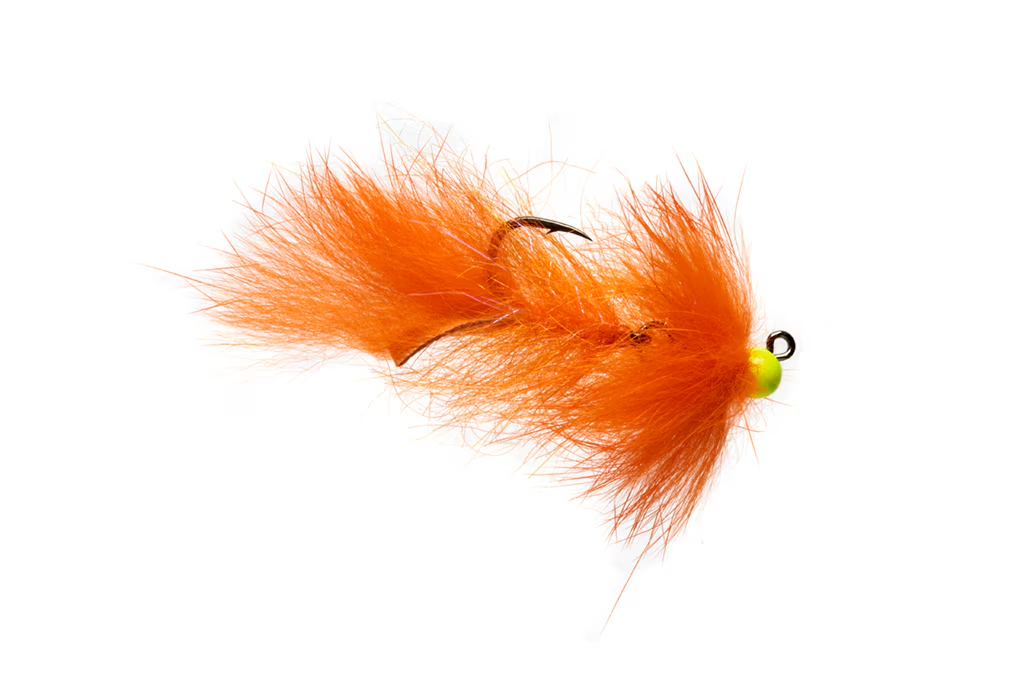
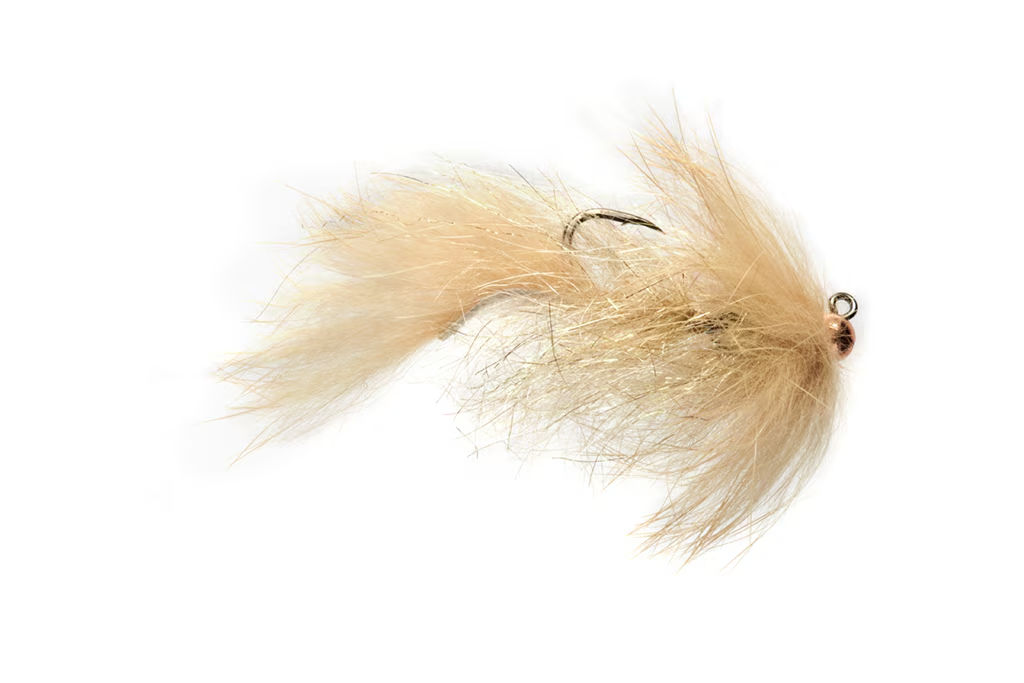
The jig shank and trailing hook make it easier to add movement to a smaller streamer like the Peach Bum, but it also ensures the hook point is riding upward. In the salt this means avoiding the oyster beds and corral. In fresh water it means not getting hung up on the root wads that offer shelter to the biggest fish. The articulation combined with the natural flow from the rabbit fur makes it nearly impossible for this fly to ever stop moving. The dubbed body has just enough flash to grab attention without making fish nervous in high visibility situations. The rabbit also greatly dampens the amount of disruption this fly makes hitting the water. It just flat out gets eaten.
Now Available in Orange, and Tan
Both: For anglers getting on the water this year, why do they need your flies in their boxes?
Josh: Fishing has defined my life from the start. Whatever species I pursue, I go all-in. I’m intent on catching fish with every cast. Sure, I sometimes head out just to escape the noise, but most days I’m on the water to fill the net. Slip a dozen of these patterns into your pocket and fish with absolute confidence. They’re engineered for every moment, not just that once-a-year hatch. Built to mimic what fish crave every day of the week, they perform year-round—wherever you cast.
Pete: The reasons are rather simple. My goal when designing a new pattern or tweaking an older
One is to always consider who might end up fishing this fly. It’s fairly simple as a tyer to customize your own flies for local waters and conditions. But what happens when that fly ends up a state away or on the other coast? For me to feel like a fly is successful it must work for anyone who ties it on their line. There is a level of responsibility in offering a fly that works regardless of the person using it. That is always in my mind from the first prototype all the way through testing.
When you fish my flies, you can have full confidence that the materials involved are the right ones. Admittedly, I could and should be working on my casting a bit more, but I would still rather spend that time developing a pattern that more than makes up for my average casting skills. For anyone who fishes my flies that means more enjoyable time on the water. If you can get them in the water, the fish will find them.
Both: what’s your favorite species to fish for?
Josh: For me, it’s the sea-run cutthroat trout. Growing up in Olympia, I became obsessed with these fish. A trout in saltwater surprises many. The vastness of Puget Sound can feel daunting, but this is where I grew up. Sea-run cutthroat will test every facet of your angling ability. They demand both technical precision and a deep study of their behavior and habitat. You can’t simply show up and expect success; you must learn how they think and adapt to the rhythms of their environment.
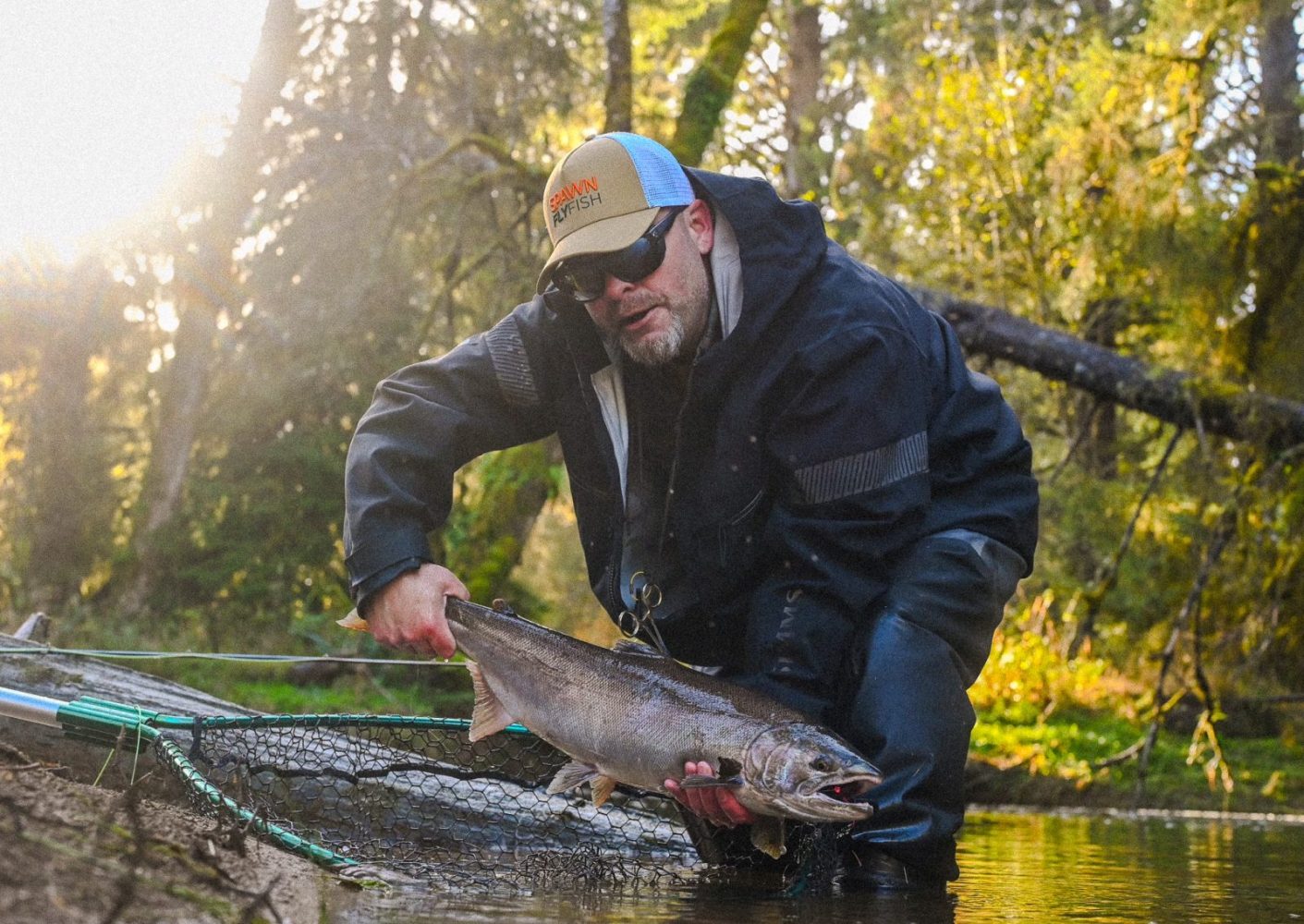
Pete: I’m a big fan of embracing each species and fishery for its own unique qualities. We are fortunate to have access to both fresh and salt water and often fish both in the same day. There is definitely something more challenging and rewarding when interacting with anadromous fish. You can almost sense part of their journey and fully appreciate the difficulties these fish overcome just to return to their home river. If that’s not enough of a committal, I would choose Coho Salmon. Big, angry and willing to chase down fly. And the flies are probably the most fun to tie!
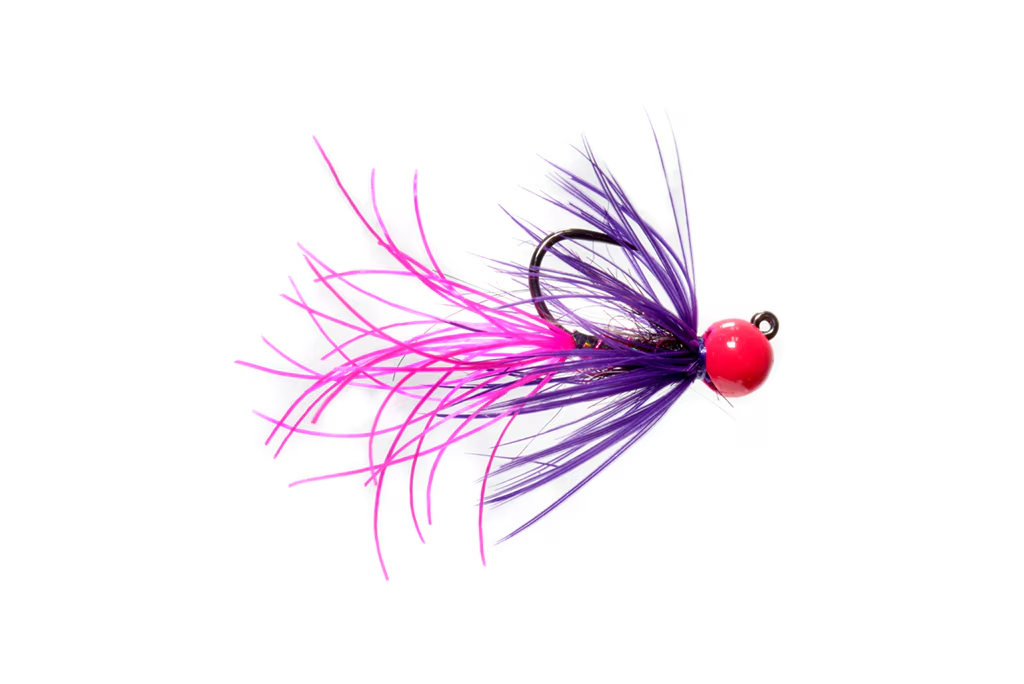
More Signature Patterns from Pete and Josh


)