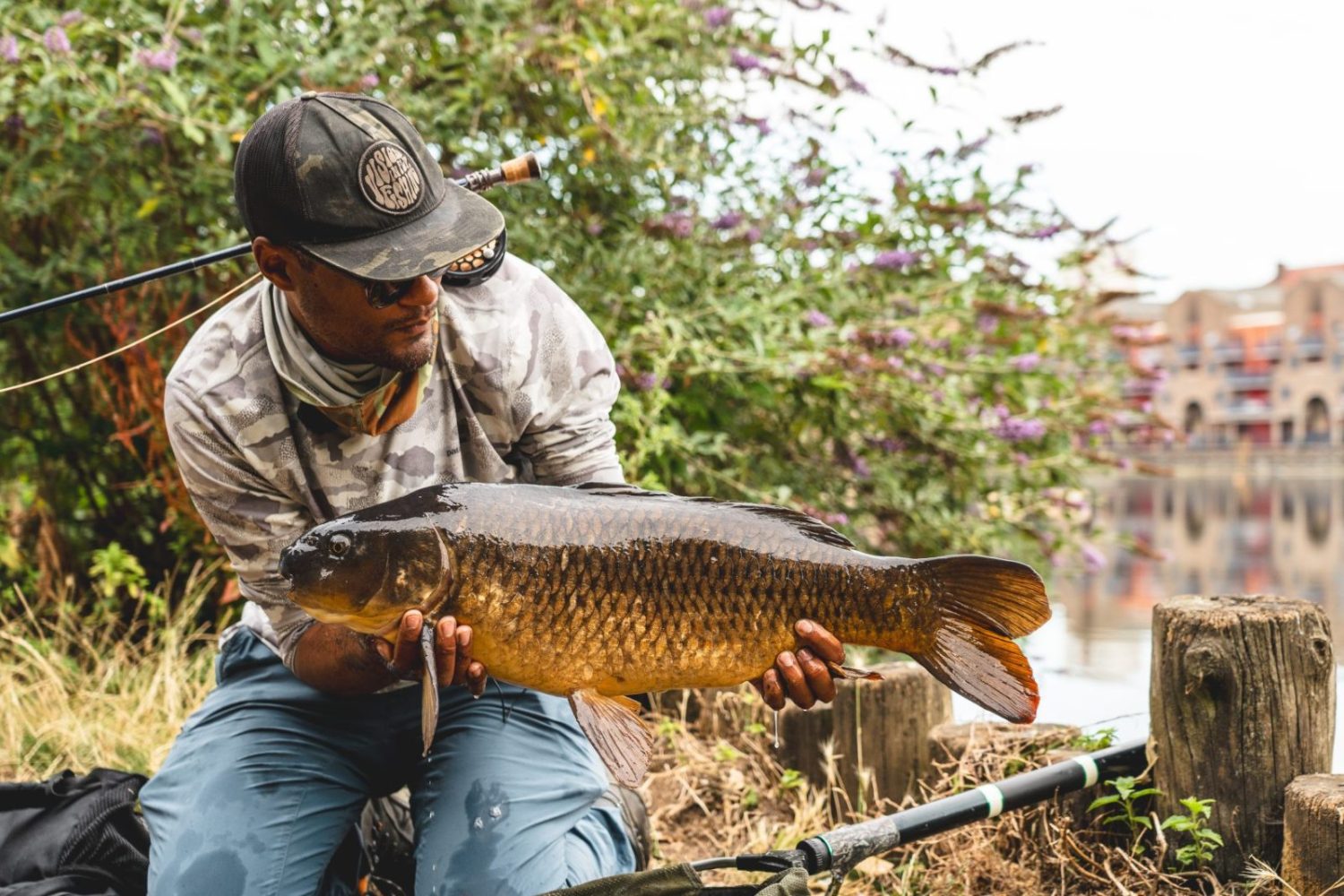
Noted by carp fly fishing advocate, Corsican Dave, when you think about fly fishing for carp in the UK, what most picture is fly fishing to biscuit-fed carp at commercial water. In the UK, these venues are heavily stocked, and anglers catapult dog biscuits on sunny days to carp feeding just under the surface. Once the carp are feeling confident, said angler will dispatch some kind of dog biscuit imitation to the feeding fish. This is a good introduction to anyone wanting to catch carp on the fly and is a perfectly legitimate way to do so given the unique circumstances surrounding UK carp on the fly. However, a single fly approach, although harder, is still in my opinion the most rewarding way to catch carp on the fly, especially on non-commercial waters.
Carp in the UK
Hundreds of years ago, carp were introduced to UK ponds for food. These fish would have all been genetically identical, if not very close, to the original carp that evolved in Eastern Europe and Western Asia… before selective breeding increased sizes and gave us leather and the different varieties of mirror carp. In the UK, there are isolated pockets of fish considered as ‘wild’. These are fish that are genetically close to the original undomesticated carp.
Chiddingstone Castle and Pant Y Lynn are two examples of venues containing fish that are descended from Roman-era stock. Most carp in UK waters are varieties from the fish bred for food and/or commercial fisheries. Today, people in the UK rarely eat carp (unlike people in parts of Eastern Europe), and anglers value carp as a great sport fish.
Carp fishing in the UK
Traditional carp fishing with bait in England (carp fishing was pioneered in England) began as a very small niche within specimen fishing during the postwar era. Carp were notoriously difficult to catch because they can spit a baited hook out quite easily if they detect something suspicious. It was in the early 80s that two anglers called Kevin Maddocks and Len Middleton invented the ‘hair rig’ where bait was mounted off the bend of the hook, originally using hair but then later with mono and braid.
Overnight, this upped anglers’ catch rates and a boom in the numbers of carp anglers began. Currently, carp are the most popular species to fish for in England. For anyone reading this outside the UK although Scotland, Wales and Northern Ireland do have carp fishing the climate and geography throughout most of those nations (less so with Wales) limits the amount of habitat where carp can exist.
Unique variables
Unlike in Australia, South Africa, Canada and the United States where carp fishing isn’t as popular and where the climate and geography can be prime for carp to reproduce very well, the UK has very few waterways to target where the fish see very little angling pressure. Here in London, most open-access waters with carp in will have fish populations that have seen every method imaginable thrown at them. Because of this, fish are often very wary of even flies. This creates far more challenging fishing than in places where carp are significantly less pressured.
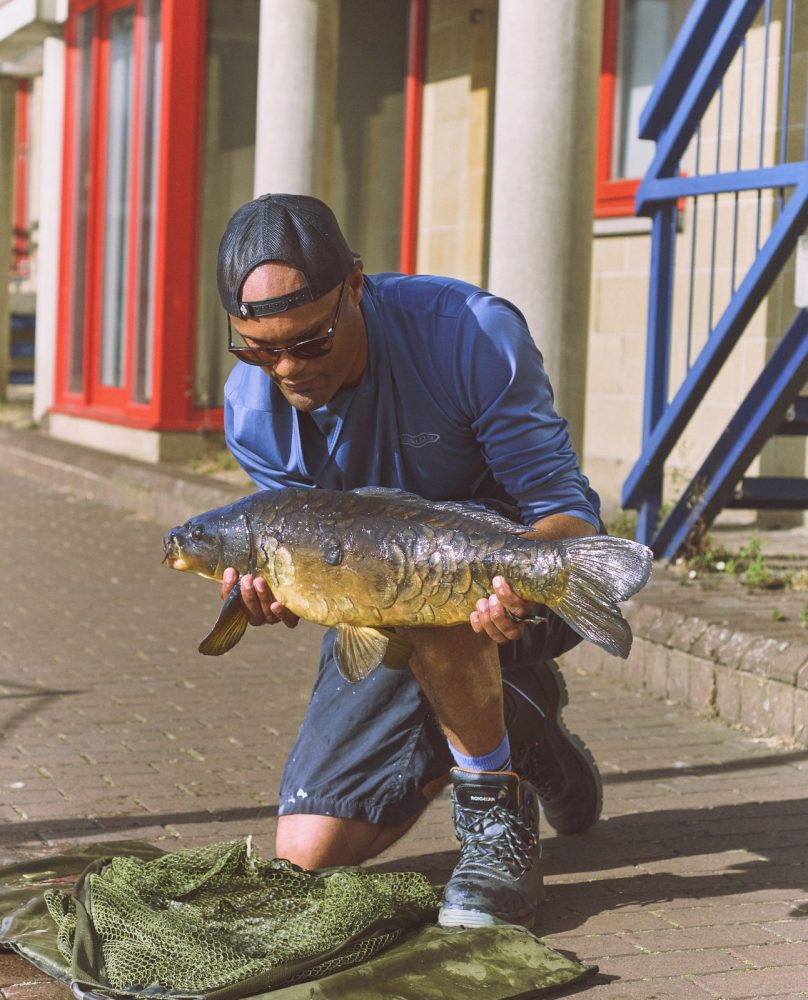
Venues for Carp
In order to catch carp on the fly, we must have one of two things. Either clear water or fish that regularly patrol the upper layers and edges of venues with coloured water. It’s essential to see the carp easily in order to read their behaviour and positioning.
Rivers: London has lots of small streams and a few smaller rivers. Most hold carp, and in the majority of cases the carp will often be ex-pond pets, so the population will be a mixture of ‘natural’ carp and koi/ghost carp (the latter a natural/koi hybrid). Fish will often group up in certain stretches of water, so investing time in walking the river is essential.
Stillwaters: In London these can range from small ponds all the way to sizeable reservoirs or very deep docks. Generally, stillwaters will usually be busy with carp anglers, but because carp on the fly requires the angler to be super mobile and active, you often have an advantage over many anglers off the back of legwork.
Canals: Less pressured than still waters, but backcasting can be problematic, and fish can be very nomadic. I haven’t personally caught a carp on the fly from a canal, but the first carp on the fly I ever hooked was in the River Lea Navigation, which is pretty much a canal.
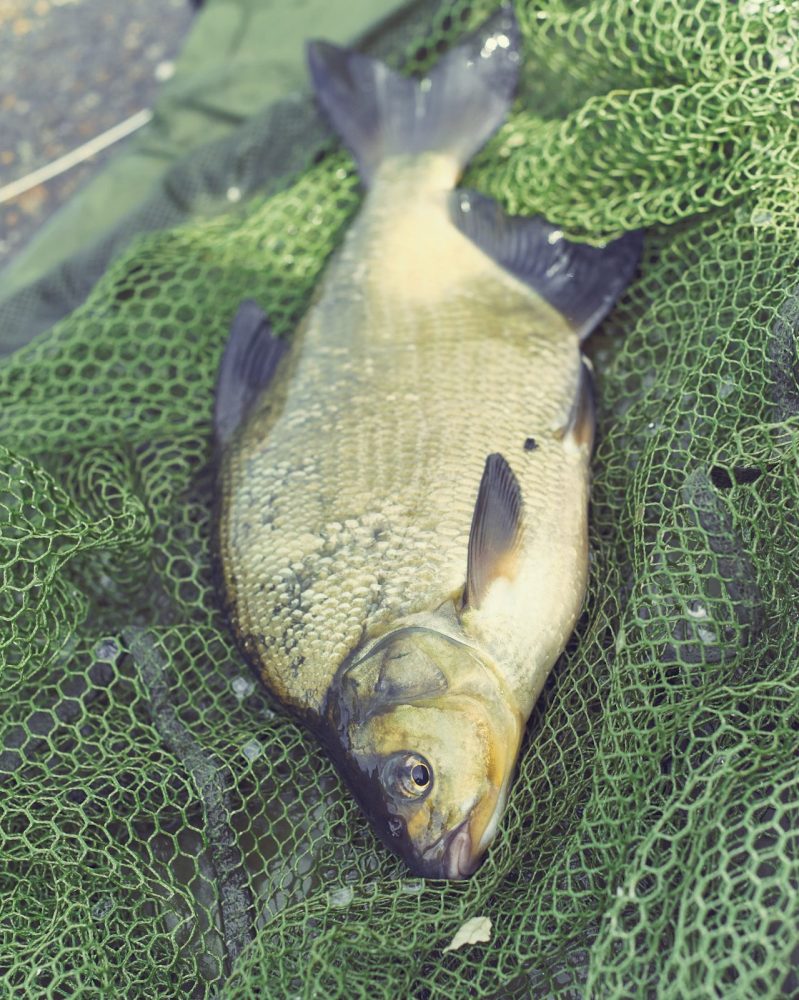
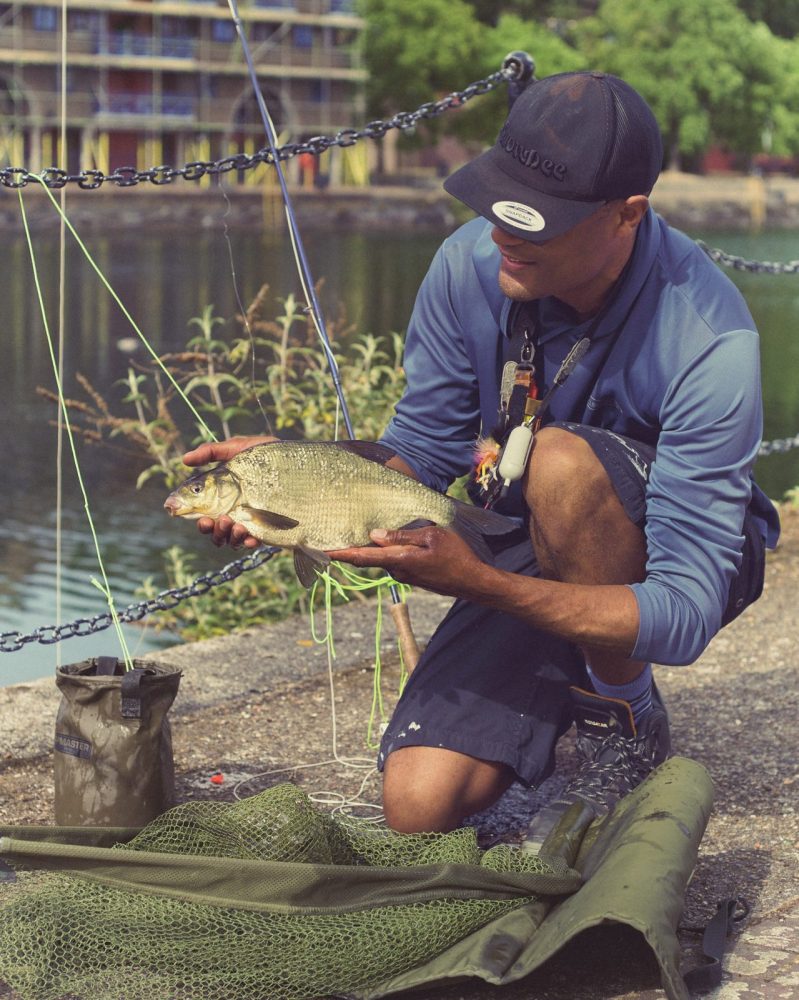
Bream are an exciting by-catch while fly fishing for carp in the UK
Kit for Carp
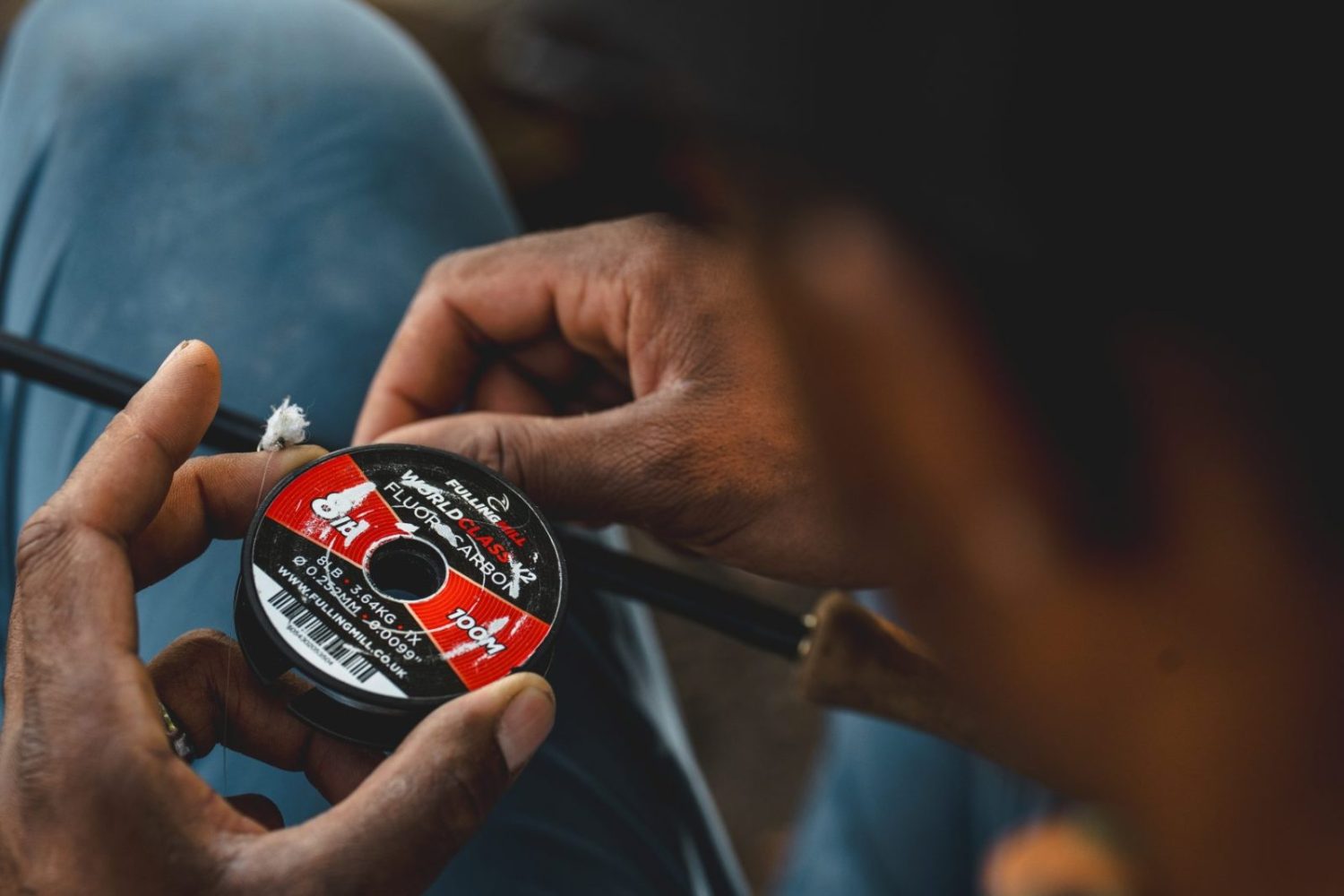
I typically use a 9-foot 8 or 9wt rod. For smaller carp, I use a Diamondback 10’7″ 3wt and Snowbee Prestige 9’6″ 3wt for carp under 6 pounds. However, once you start creeping up to double figures, you are dealing with fish that possess a lot of power and endurance. If you are fishing around objects like overhanging bushes, snags, etc it is a wise idea to go stronger than you think. I use Fulling Mill fluorocarbon in 0.25mm (8lb) for most of my carp fishing.
Carp Flies
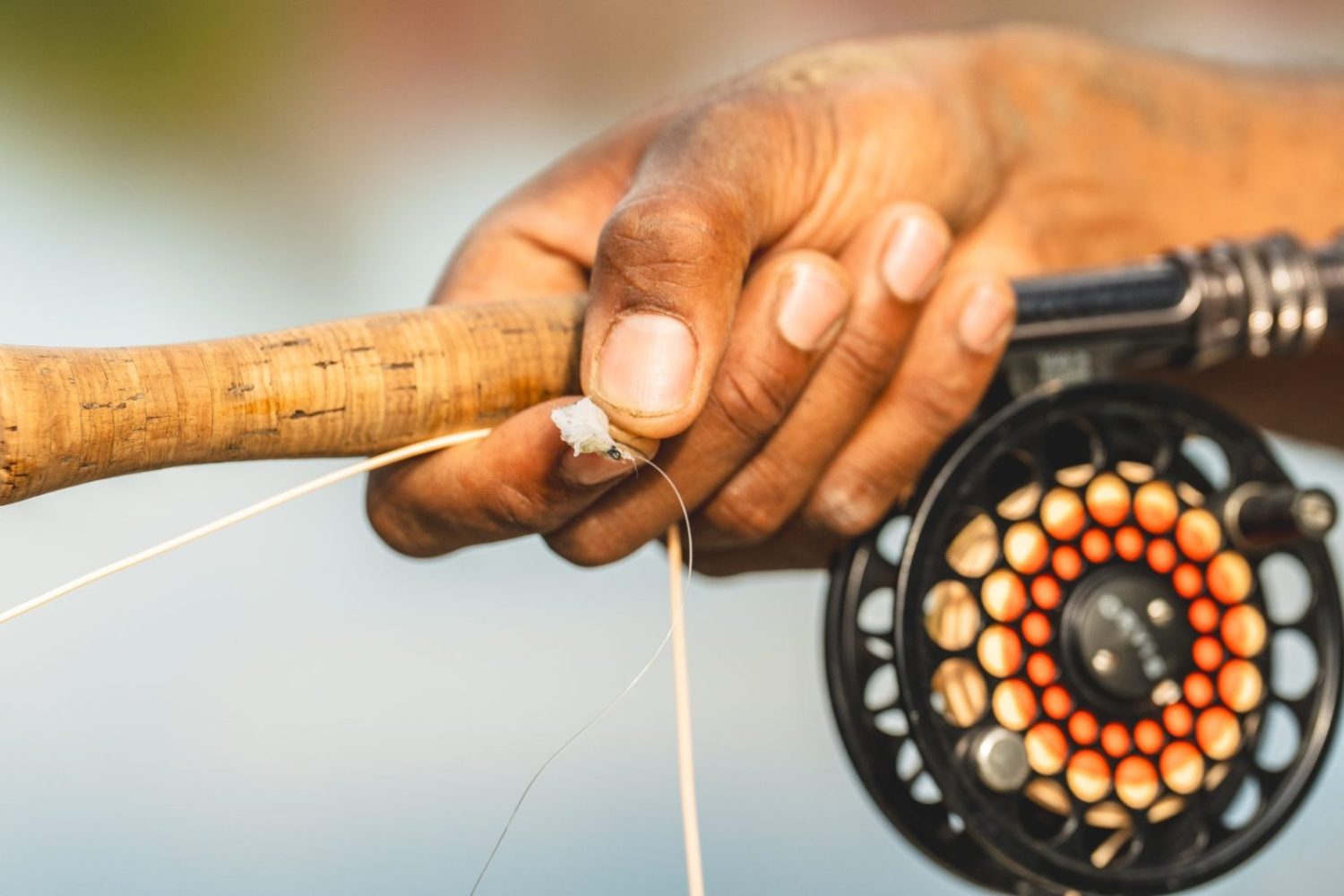
I have to admit to being pretty conservative in my choice; a bread fly has proven to be my most successful pattern, accounting for 80% of captures. In London, it is very much matching the hatch as the public waters I fish get a lot of people feeding bread to the wildfowl. In coloured water the fly is more visible than darker patterns as it tracks through the water column. Other patterns I use are worms (squirmy, chenille and cactus).
Weight is also very important. Carrying patterns that float and others that sink at different rates is key. Carp will swim at all levels of the water column, so being able to get down quickly, but also slowly enough that it doesn’t disappear from their window of vision too quickly, is far more important than pattern.
On rivers, having very heavy patterns is necessary. When casting across currents, you have a very small window to get the fly to hit the bottom before drag sets in. Weight can range from tungsten beads in the case of worm patterns all the way to lead wire for bread flies. Hook-wise, I use the Bonio Hook, which is super sharp and on very strong wire. I have caught using smaller hooks; adjust to the size of the fish accordingly.
Methods for UK Carp
The main method is ‘drag and drop’, locate carp moving a moderate pace and place a fly in their path. Carp will either ignore, spook or take the fly. Usually all three in equal measure, so the more chances you get to get a fly in front of fish, the higher the probability of a take. No other species I have fished for requires as much legwork per cast as carp.
In deeper waters, you are either trying to get fish to take off the surface or in midwater. In shallow areas, you can present flies on the bottom, though generally, carp need to see the fly sinking to the bottom. When resting, twitch the fly when it is in their field of vision. The fly ideally needs to be within 4ft of the fish. On rivers, depending on the flow, you can catch in all levels of the water column.
Tips for more Carp on the Fly
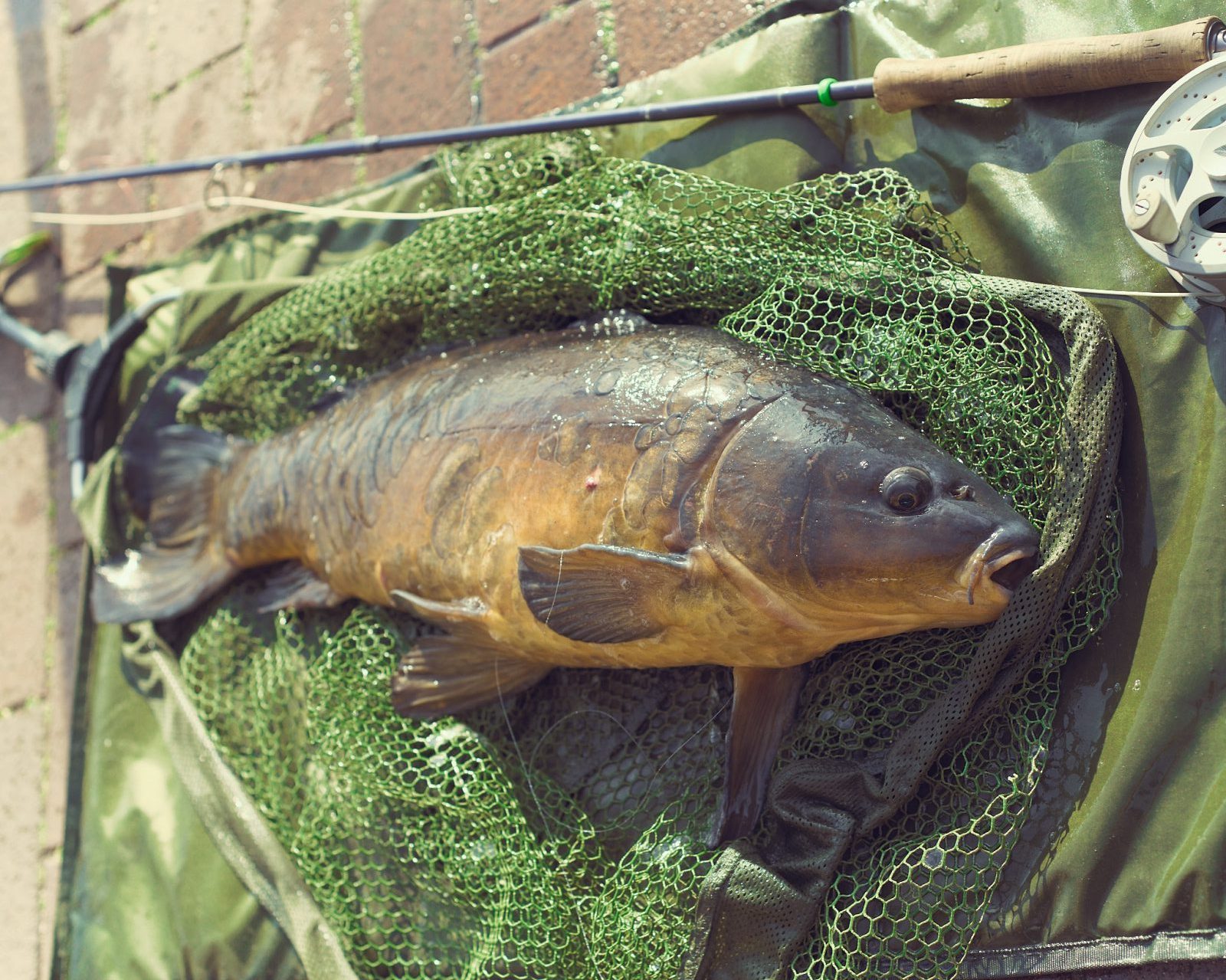
When walking around trying to find fish, always be prepared to make a cast. Try using your landing net as a line try, or even use a line tray. Where possible, have all accessories like unhooking mats mounted to your luggage system. This allows you to have free hands. Stay at the ready to make a quick cast. The unprepared angler will almost certainly miss a lot of prime opportunities by simply being unprepared.
Interested in Fly Fishing for Carp? Curious about urban angling? Check out the full film with Tim Pottage below:
In this fly fishing video, we join Fulling Mill Ambassador Tim Pottage for a morning of carp fishing in London. For those of you living in London, or many other cities, for that matter, carp are an abundant species—you just have to put in the time to find them.



)