When the Grasshoppers Fall: Hopper Fishing at Estancia Tecka
Published: 31st July 2026 | Author: Iñaki Larrea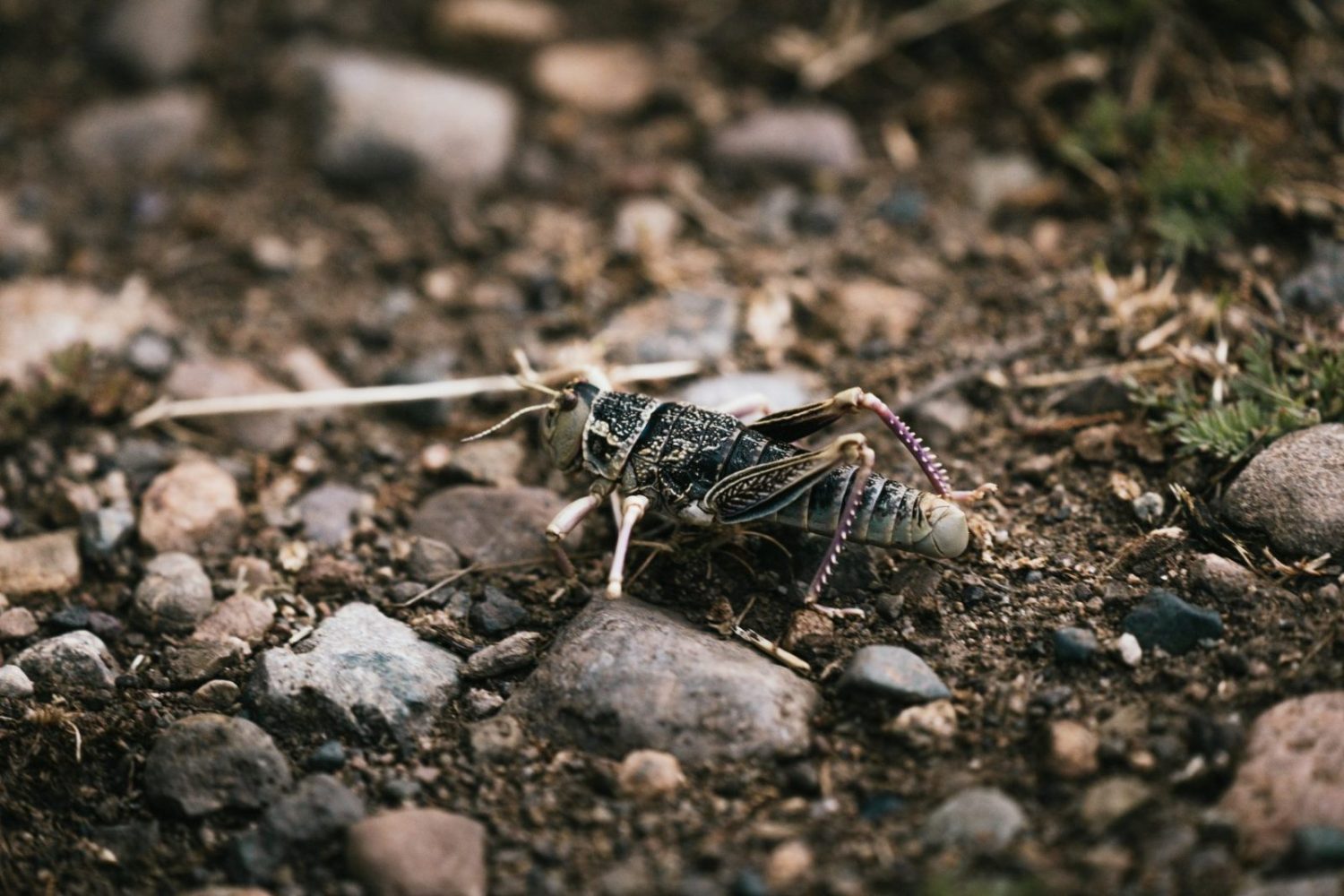
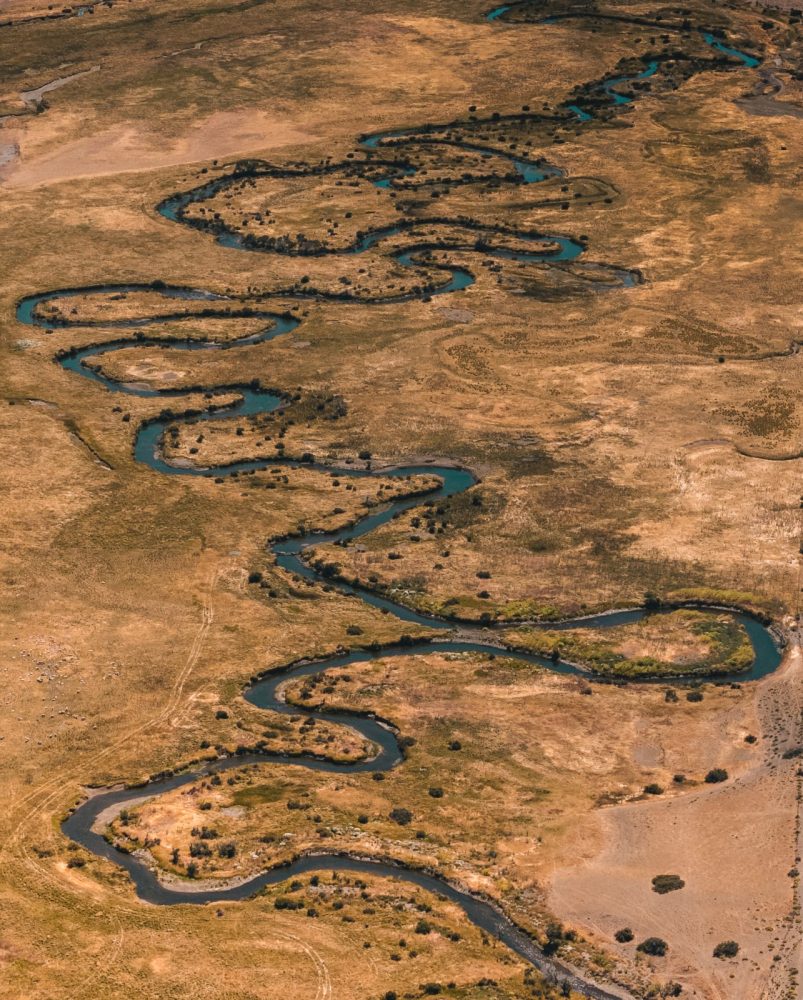
Estancia Tecka sits about 50 miles south of Esquel, in the province of Chubut, at the base of the Andes. Founded in 1910, when the British imported Merino sheep from Australia, it has operated as one of Argentina’s most traditional working ranches ever since — 435,000 acres, 80,000 sheep, 800,000 pounds of organic wool per year. The livestock operation is the core of the business. The fly fishing, and more specifically, the hopper fishing, has become something the lodge is known for across the world sinfe it’s orgin roughly 26 years ago.
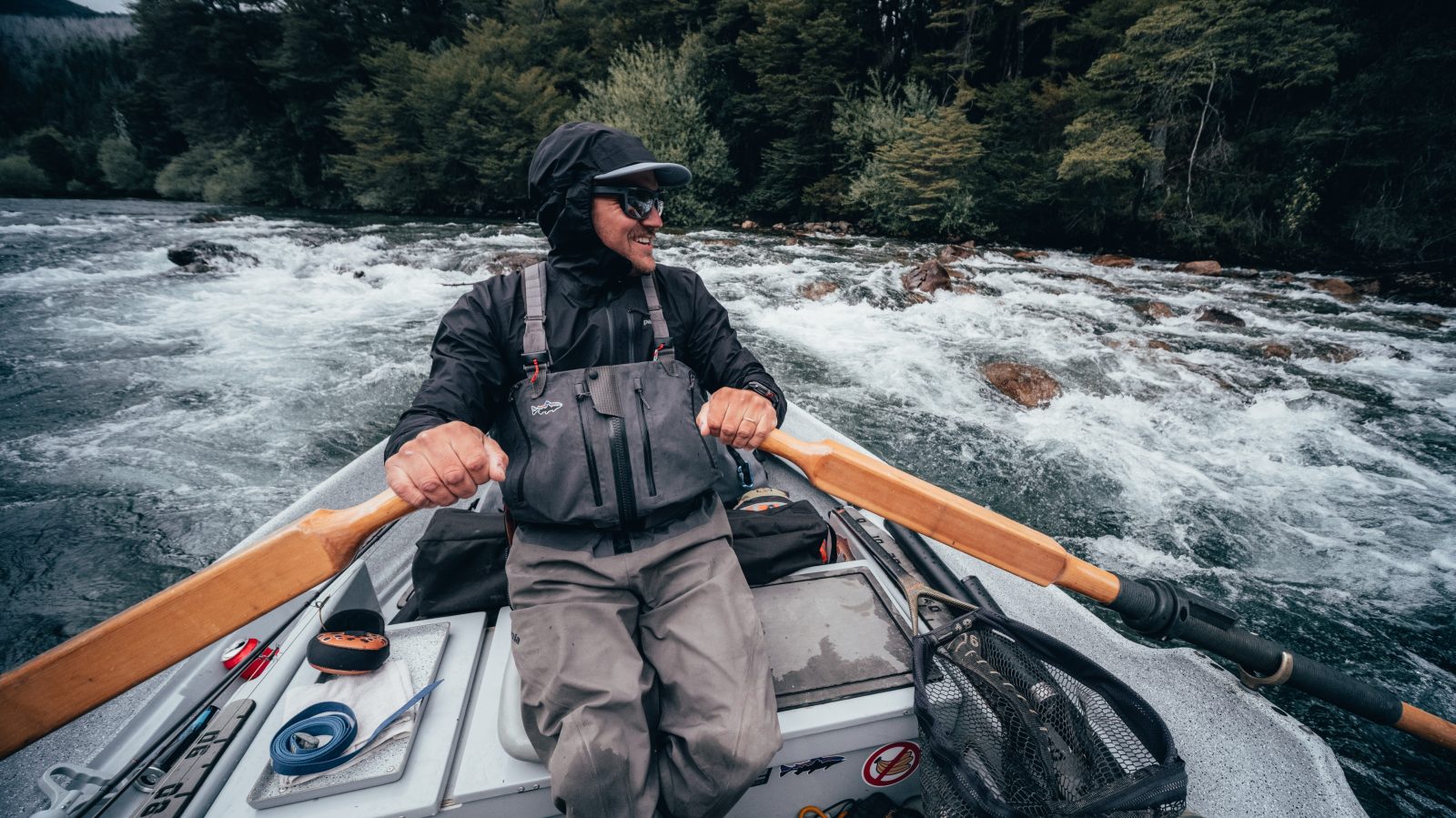
What Estancia Tecka offers that no other ranch in Argentina can match is 96 miles of private trout water. The Corcovado River runs through the property on its way to the Pacific, carrying rainbow, brown, and brook trout, and is fished primarily from drift boats with some wading on the flats and freestone banks. The Río Tecka is a spring creek — smaller, slower, more demanding — fished from the bank with dry flies and nymphs, the kind of water where presentation matters more than anything else. Additional spring creeks and lagoons are scattered across the property. Guests rarely fish the same water twice in a week, and the range of environments — from big drifting water to tight technical creeks — means the fishing adjusts to conditions rather than the other way around.
Fish run 16 to 18 inches as a reliable average, with trophy fish pushing 25 inches. A 28-inch rainbow on the upper Corcovado is on the lodge’s record books.
This post is about a specific hatch on a special piece of water — an event that doesn’t happen every year. Meet the Tucarua grasshopper. This grasshopper species might just be the epitome of hopper fishing in Patagonia.
The Tucura Grasshopper
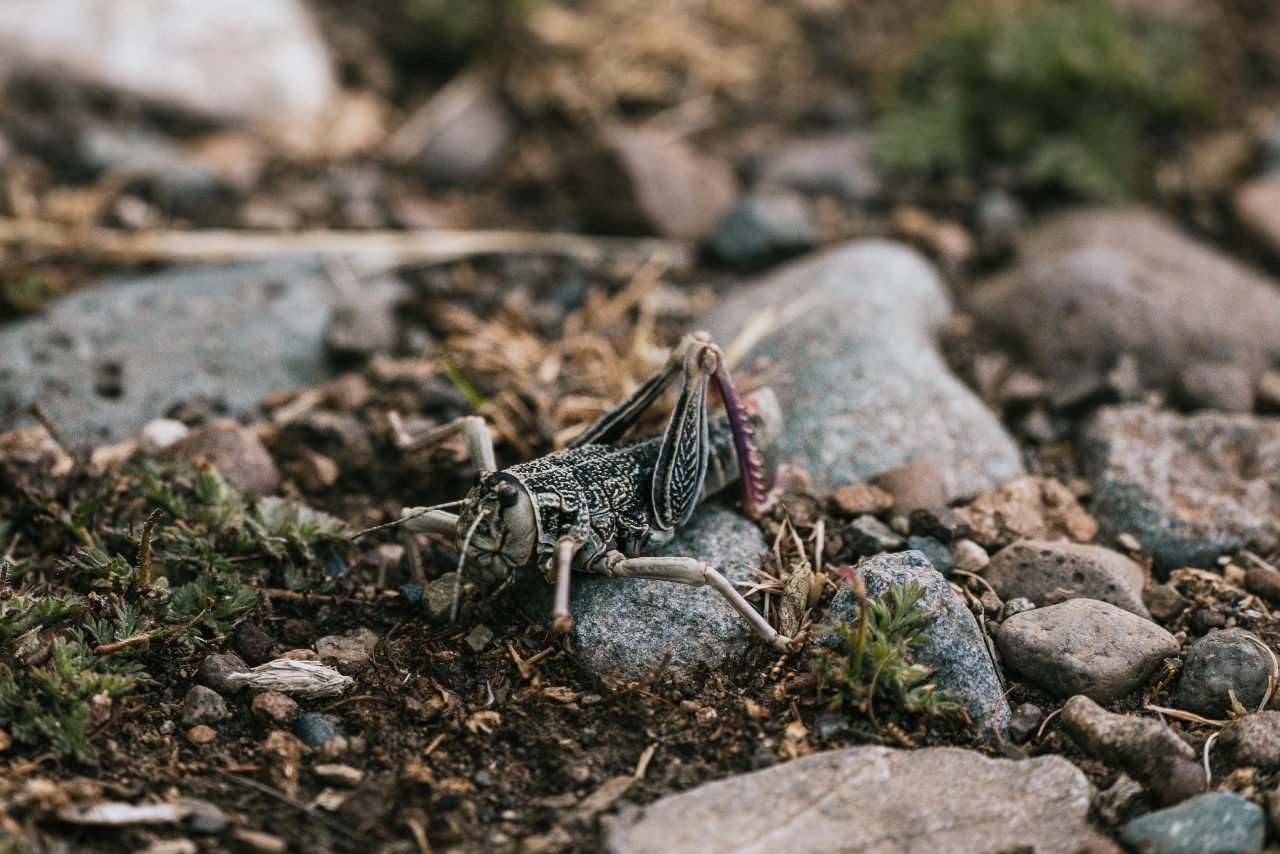
The tucura sapo (Bufonacris sp.) is a flightless grasshopper endemic to Patagonia. It reaches 5 to 8 centimeters in length, with a wide, heavy body built low to the ground — the toad-like shape that gives it the name. It doesn’t fly, it doesn’t migrate, and outside of outbreak years it’s simply part of the steppe landscape.
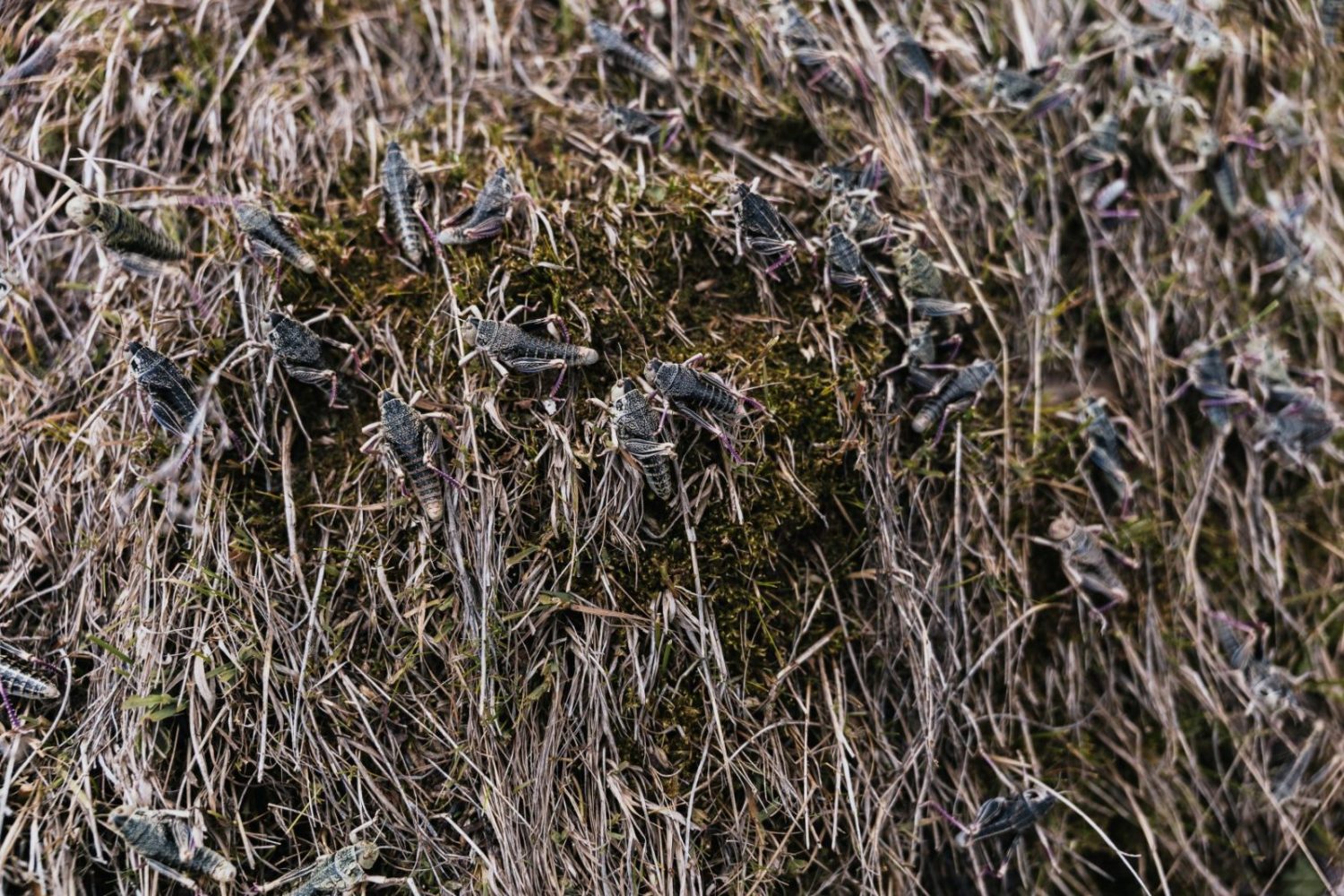
The appearance is climatically triggered. Adult females deposit egg capsules — oothecae — in dry, loose soil. Under normal conditions, moisture and fungal infection keep populations in check. When a dry winter is followed by a warm spring, those capsules survive in high numbers and hatch simultaneously. What emerges is not a hatch in the traditional entomological sense. It’s an invasion — thousands of large insects moving across fields, stripping vegetation, falling into every body of water along every bank.
The tucura is aggressive with vegetation and cannibalistic under density pressure. Its size makes it a high-calorie target that large trout don’t ignore.
The Río Tecka and the Tucura
The tucura reaches the Río Tecka. It doesn’t reach the Corcovado. That distinction matters, and it shapes everything about how this fishing plays out.
The Tecka is a spring creek — clear, slow-moving, with fish that are accustomed to inspecting their food before eating it. Under normal conditions, it’s a technical fishery that demands accurate presentation and fine tippets. When the tucura arrives, those same fish shift into a different mode. They’re not selective anymore — they’re opportunistic. But only during specific windows.
The first thing most anglers miss: the fish don’t eat all day. A single tucura is a high-calorie meal — far more energy than any mayfly or stonefly. Trout feed hard early in the morning and again late in the evening, then largely shut down through the middle of the day. They’re not absent — they’re full. Arriving at 10am expecting rising fish is a mistake. Being on the bank at first light is not.
This is sight fishing. The Tecka’s clarity means you’re placing the fly to fish you can see, watching the take in real time. When it works, it’s the most direct form of dry fly fishing there is.
Hopper Fishing the Tucura Hatch
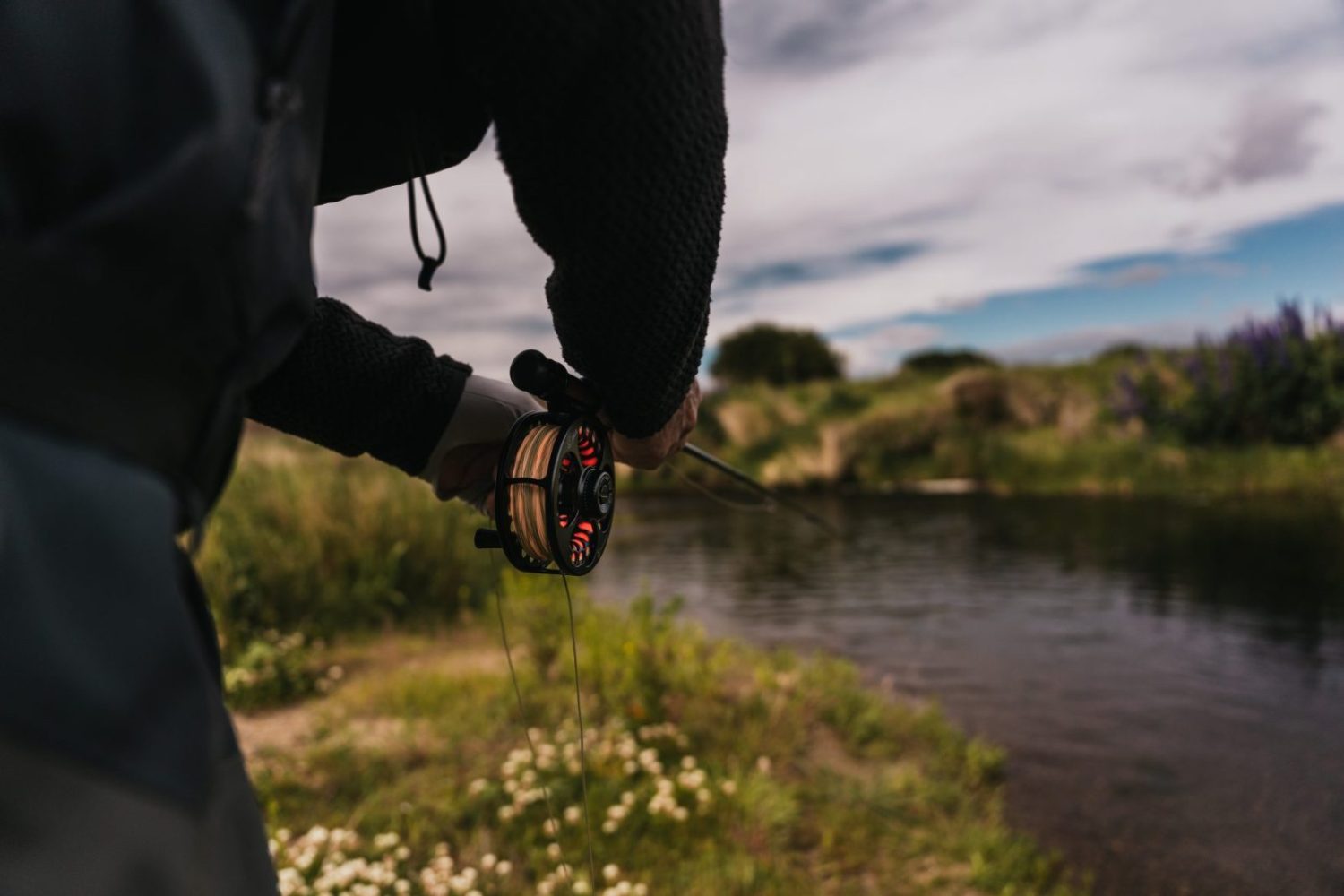
For tucura fishing on the Tecka, #5 and #6 rods — 9 to 9’6” — are the right tools for two reasons: the size of the fish, and the wind. Patagonian wind is not a variable — it’s a constant. It shows up every afternoon without exception, and on exposed spring creek banks it can make casting a lighter rod genuinely unproductive. A #4 gets overpowered by both the wind and the fish. A #7 is unnecessary. The #5 and #6 sit exactly where they need to be — enough backbone to turn over large foam patterns in the wind, enough sensitivity to feel what’s happening on the presentation. Floating lines handle the majority of situations on this water.
Leaders deserve specific attention. Nine-foot leaders with 3x or 4x tippet are the standard. The problem is that large foam patterns — some tied on #2 hooks — combined with Patagonian wind create serious torsion that tangles leaders constantly. The solution is a small barrel swivel between the leader and tippet. It removes the twist completely. Two seasons of using it consistently have made it a non-negotiable part of the setup.
The Fly Box
The grasshopper flies that work here are generally large, leggy, foam patterns. When a tucura falls into the water, it kicks, pushes the surface film, and makes noise. A dense fly is ideal, for a fly that lands too quietly is often ignored. The take on an active fish is a committed eat, but anglers should still pause before setting the hook to get the best hookups.
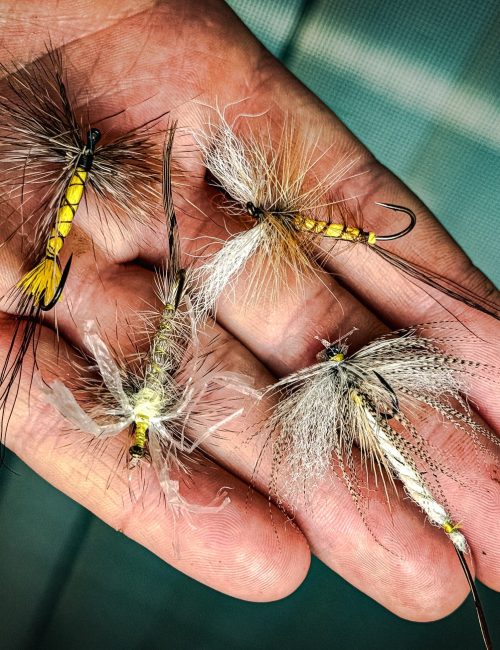
Having some of the patterns below can play into your success if you plan to go fish tucura hoppers!
Project Hopper
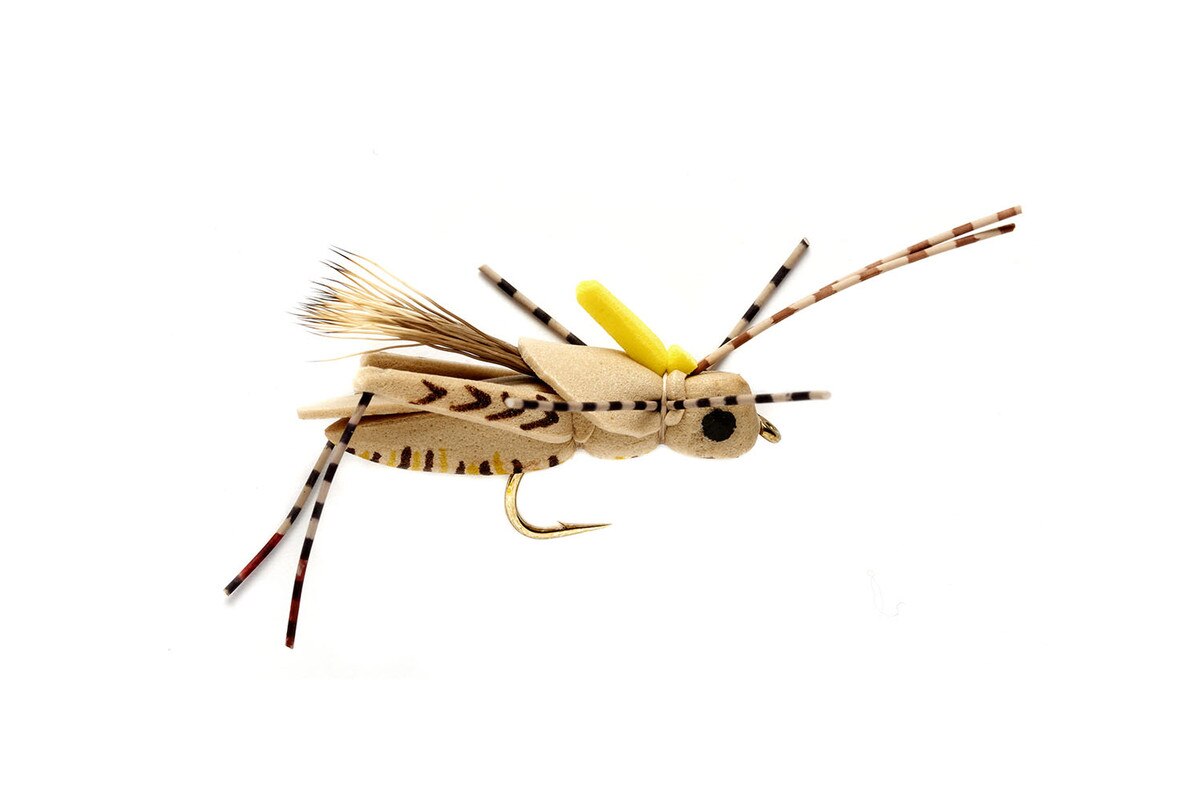
Cheech’s signature hopper might just be the most realistic profile in the lineup. In the clear water of the Tecka, where fish have time to inspect, this pattern closes the deal.
Panther Creek Hopper (Olive or Tan)


Floats high, high visibility, built for tight bank fishing and hopper-dropper setups. This hopper silhouette is sure to turn some heads of trout keyed in on tucuras.
Bubba’s Hog Call Hopper
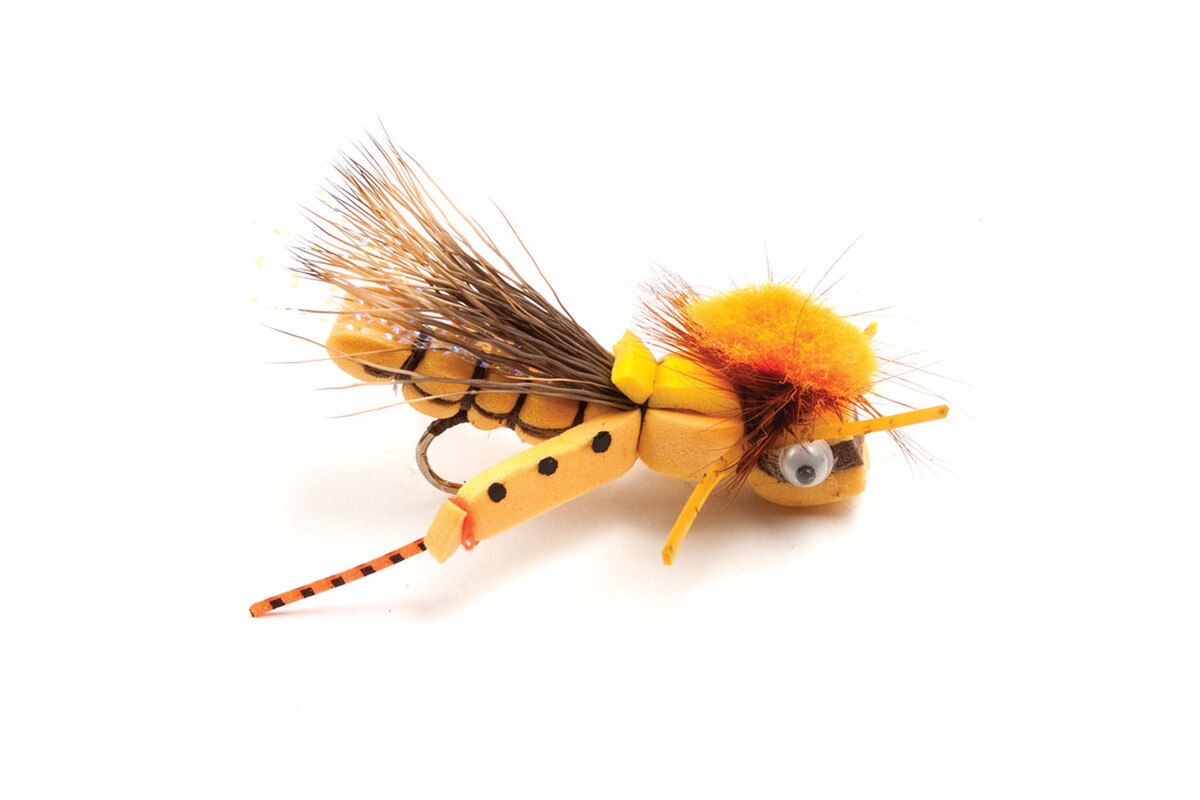

This fly lands optimally on the water, calling the attention of hopper-feeding trout! Scott “Bubba” Smith’s signature pattern works anywhere that grasshoppers exist, and should be a top consideration if you’re going to fish Patagonia furing hopper season.
Safe-House Hopper

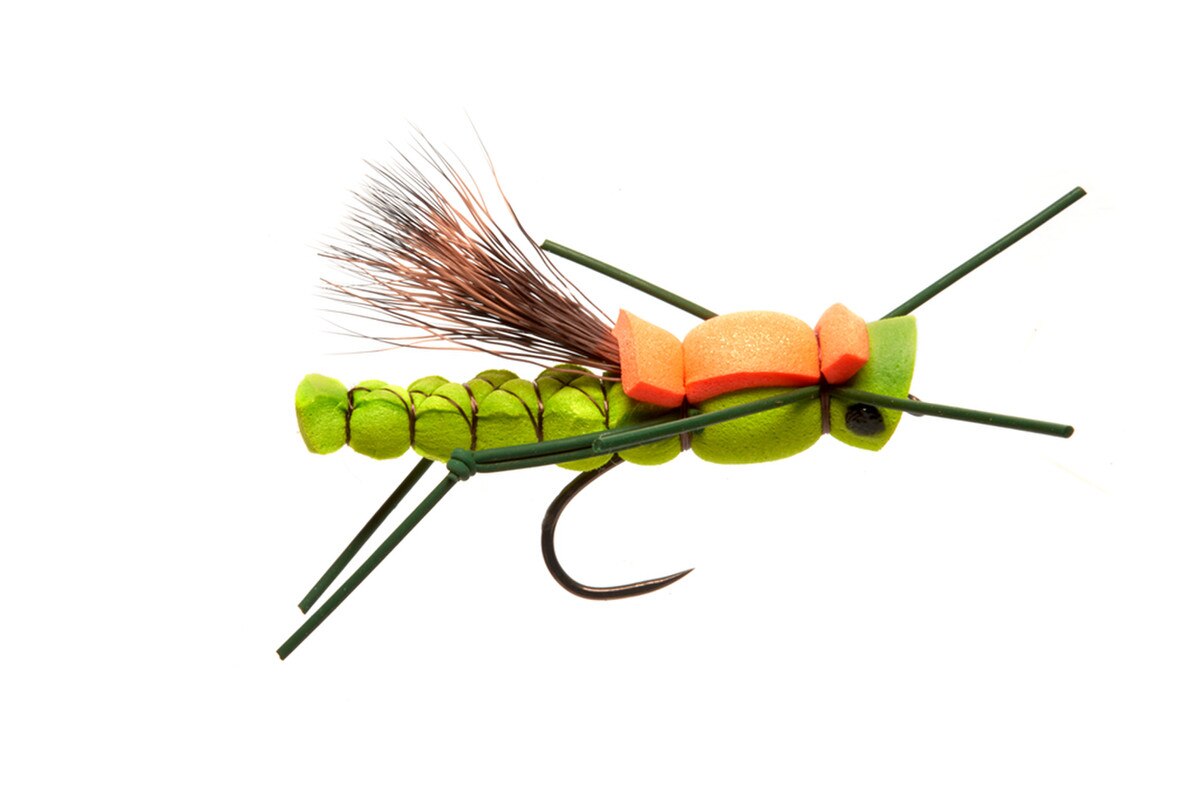
The Safe-House Hopper by Signature Tyer Josh Jenkins has a tapered, extended body crafted using cylindrical foam. The cupped head creates a stellar popping noise relative to the size of the fly, but it works equally as well when skated or dead drifted. While it excels for smallmouth bass and other warm water species, don’t overlook its potential for a more active terrestrial trout pattern, such as the tucura grasshoppers of Patagonia.
Schroeder’s Para Hop

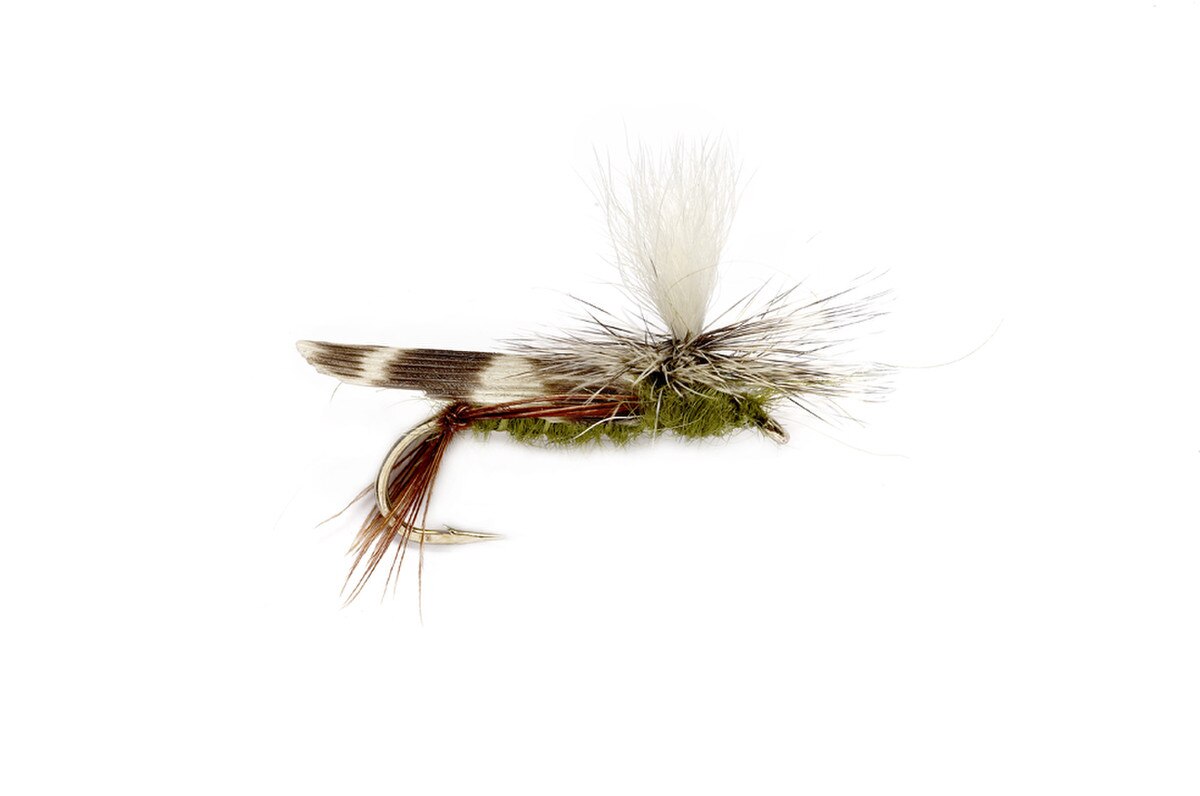
Available in tan & olive, size 8 and 10. A reliable generalist that adapts well to Tecka’s varied bank structure. This smaller hopper fly is great when fish are less willing to take a big bug. Consider it snack-sized!
Hoptimus Prime
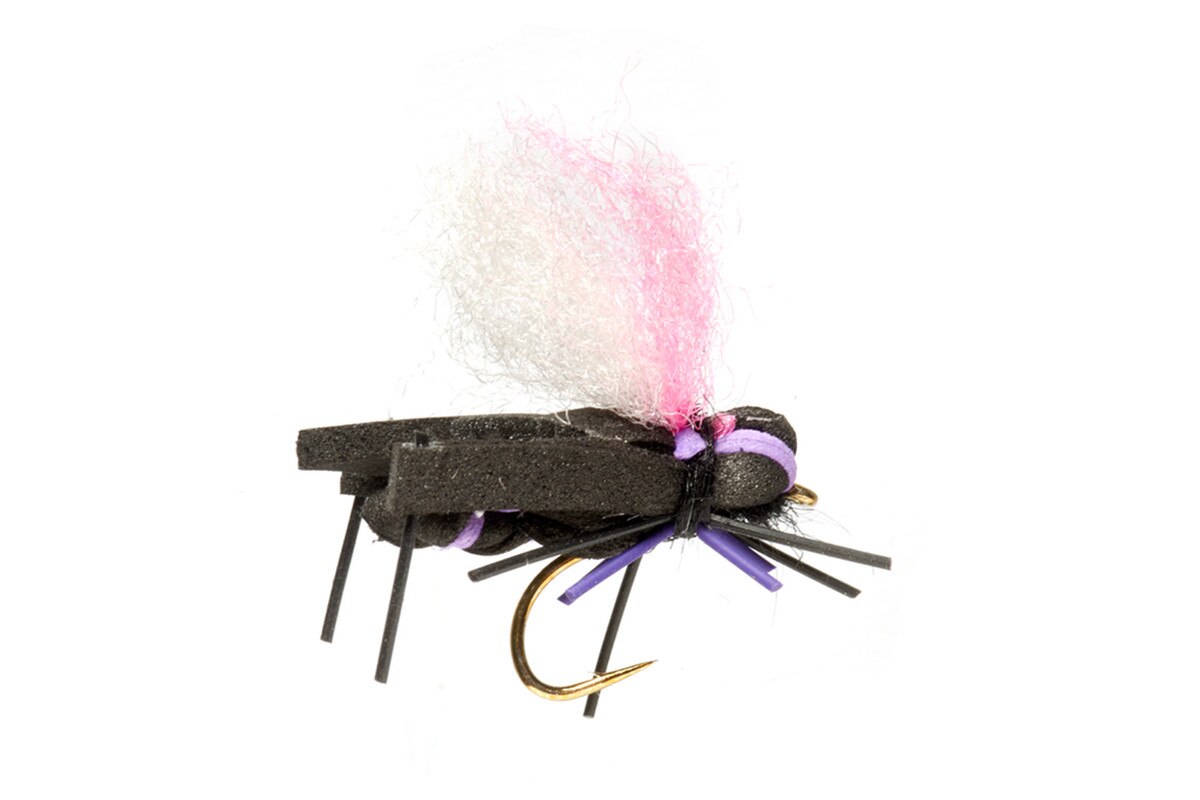
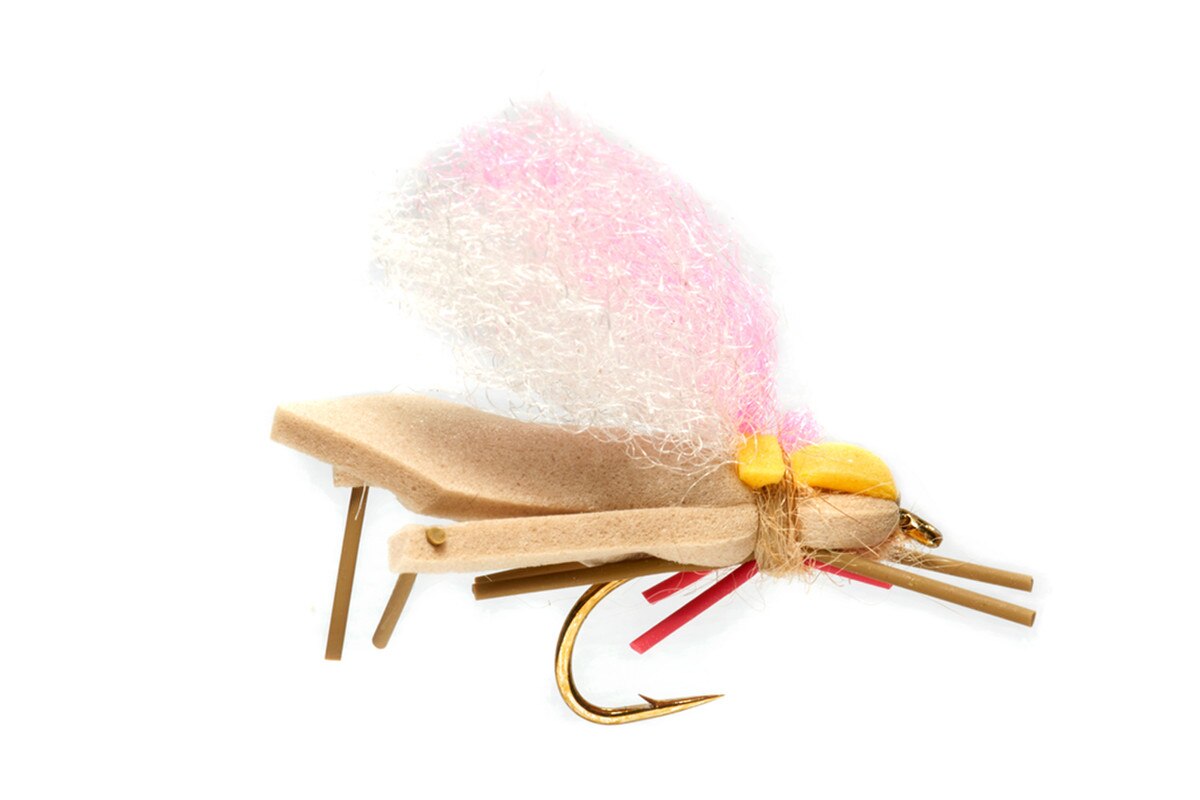
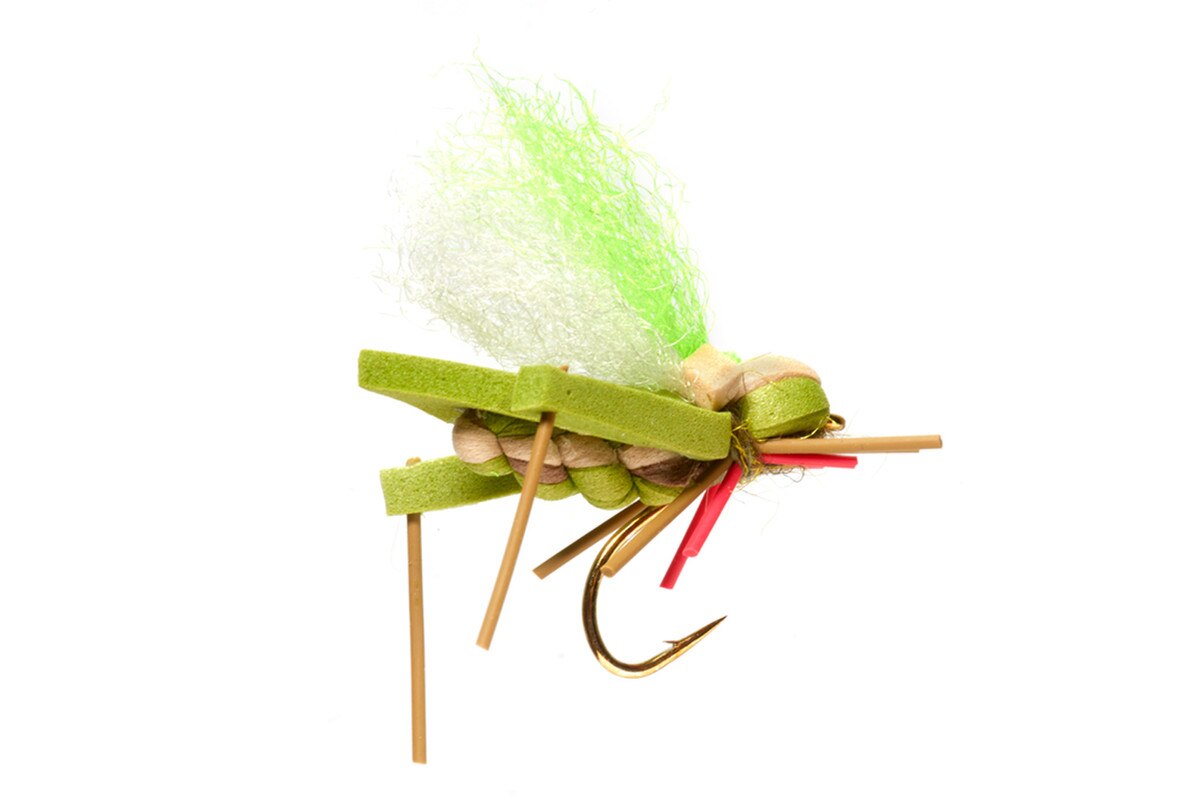
A modern variant on the twisted foam hopper made popular in Utah. Cheech has perfected this pattern. Great pattern for smacking banks likely to hold hopper eating trout!
Chubby’s


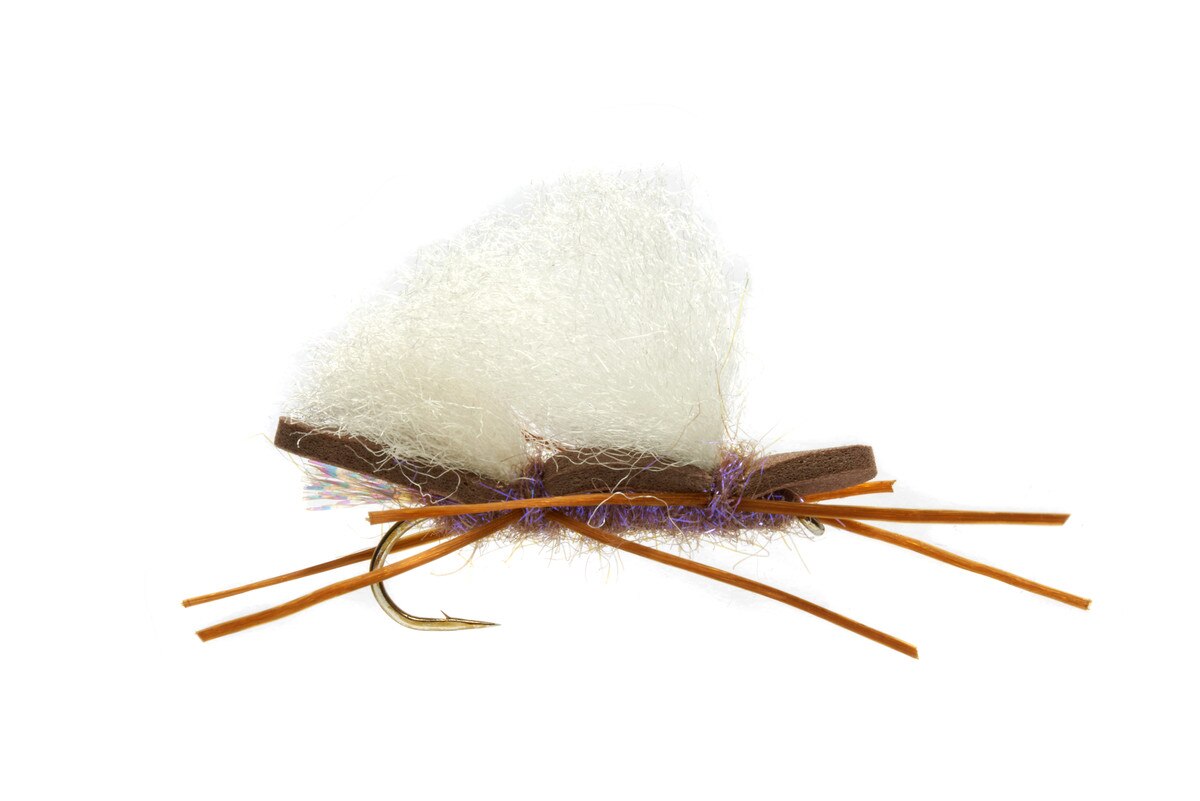
The Chubby works well as a hopper-dropper anchor when fish are willing to eat below the surface between feeding sessions. If you fish cicada or salmonfly patterns from the US, bring them. Large foam terrestrials that hit the surface hard are exactly what you need. The trout here are not reviewing pattern names.
Know When to Go
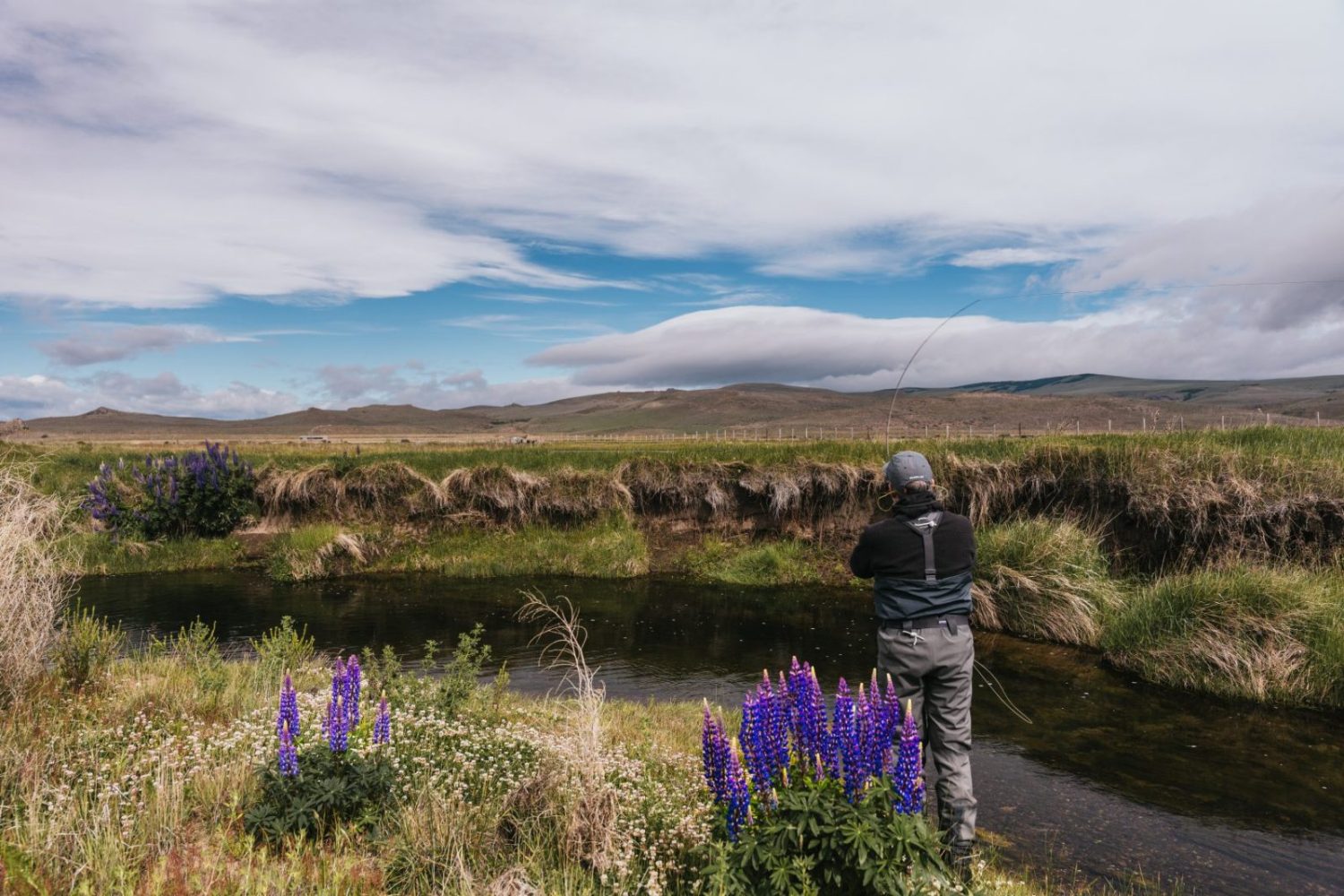
The tucura hatch on the Río Tecka doesn’t happen every year. When it does, one of Patagonia’s most technical spring creeks turns into something entirely different — a sight fishing opportunity where large trout are actively looking up, on water that usually demands everything you have just to get a refusal. Plan around it if you can. If you’re there when it happens, you’ll understand immediately why people keep coming back.
Shop Fulling Mill online or ask about us at your local fly shop!
Check out our Hopper Fly Box, perfect for storing big, buoyant dry flies like hoppers and other terrestrial patterns.
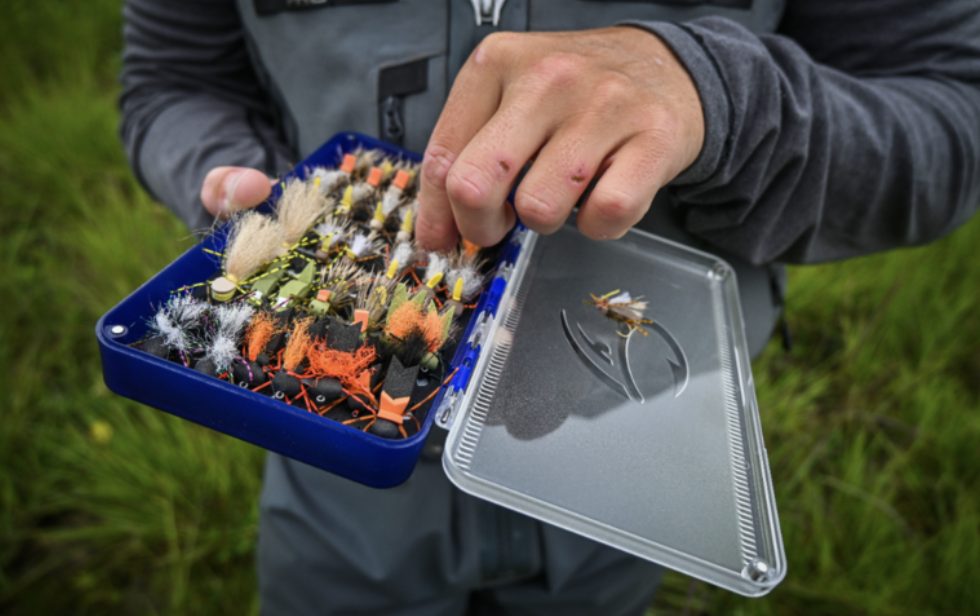
Check out all of our hopper and terrestrial flies on our website or ask for them at a dealer near you!
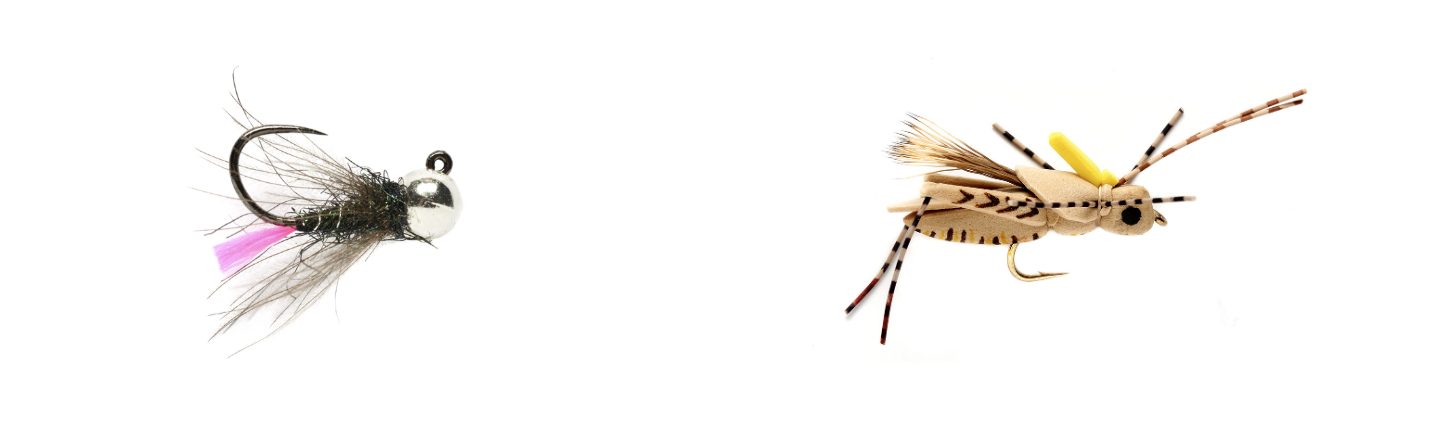
Read about some of our highly regarded dry dropper combos here: Top Hopper Dropper Combos



)